

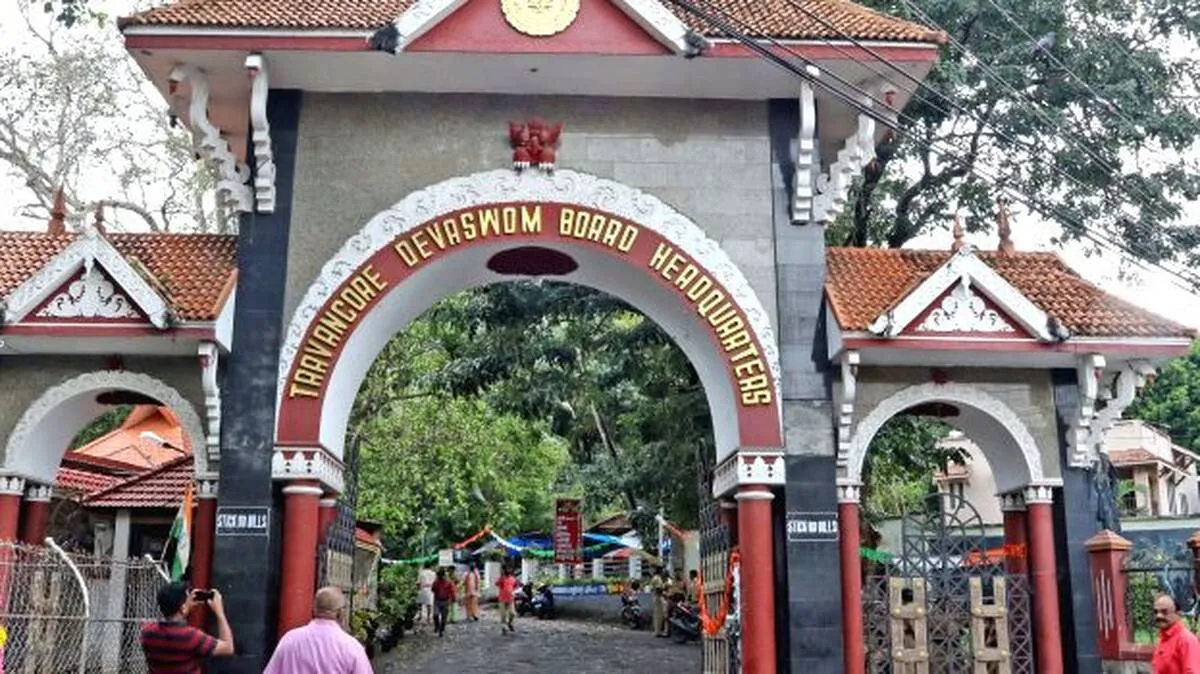
THIRUVANANTHAPURAM: Due to a crippling financial state, the government abandoned the plan to establish a 'Devaswom Tribunal'—intended to protect temple land and clear encroachments. Setting up the tribunal would require additional staff positions, and the government believes substantial funds would be needed for salaries and other employee benefits. Opposition from the Finance Department, citing the additional financial burden, also contributed to the decision to drop the proposal.
Parties would have the right to appeal tribunal verdicts, a process that would entail further costs and delays. The move to establish the tribunal was shelved with the clarification that the matter could be reconsidered once the financial situation improves.
At the same time, it was decided to continue the existing procedures for land-related cases. Instructions have also been issued to assess land encroachments and reclaim land under each Devaswom Board. The proposal to establish a tribunal was conceived to expeditiously resolve disputes involving family temples, private Devaswoms, and trusts—in addition to the Travancore, Kochi, Malabar, Guruvayur, and Koodalmanikyam Devaswom Boards.
Vast tracts of land—spanning hundreds of thousands of acres—are held under the control of Devaswom Boards and private trusts. Significant assets are being lost due to decades of encroachment, the fabrication of fraudulent documents, financial irregularities, and ongoing disputes.
Protracted litigation in civil courts had previously hindered efforts to recover Devaswom properties. The special tribunal was established with the aim of ensuring speedy justice regarding these disputes and encroachments. The initiative was based on the legal principle of treating the temple deity as a 'perpetual minor,' thereby entrusting the tribunal with the responsibility of safeguarding the assets. The tribunal was empowered to intervene *suo motu*—issuing stay orders and seizing properties—in cases involving attempts to illegally transfer, mortgage, or destroy temple assets.









 HOME
HOME LATEST
 NOTIFIED NEWS
 POLL
POLL KERALA
  EDITORIAL
  INDIA
INDIA  WORLD
WORLD  BUSINESS
  CINEMA
  SPORTS
  LIFESTYLE
  SPECIAL
  SCIENCE & TECHNOLOGY
 |
|