

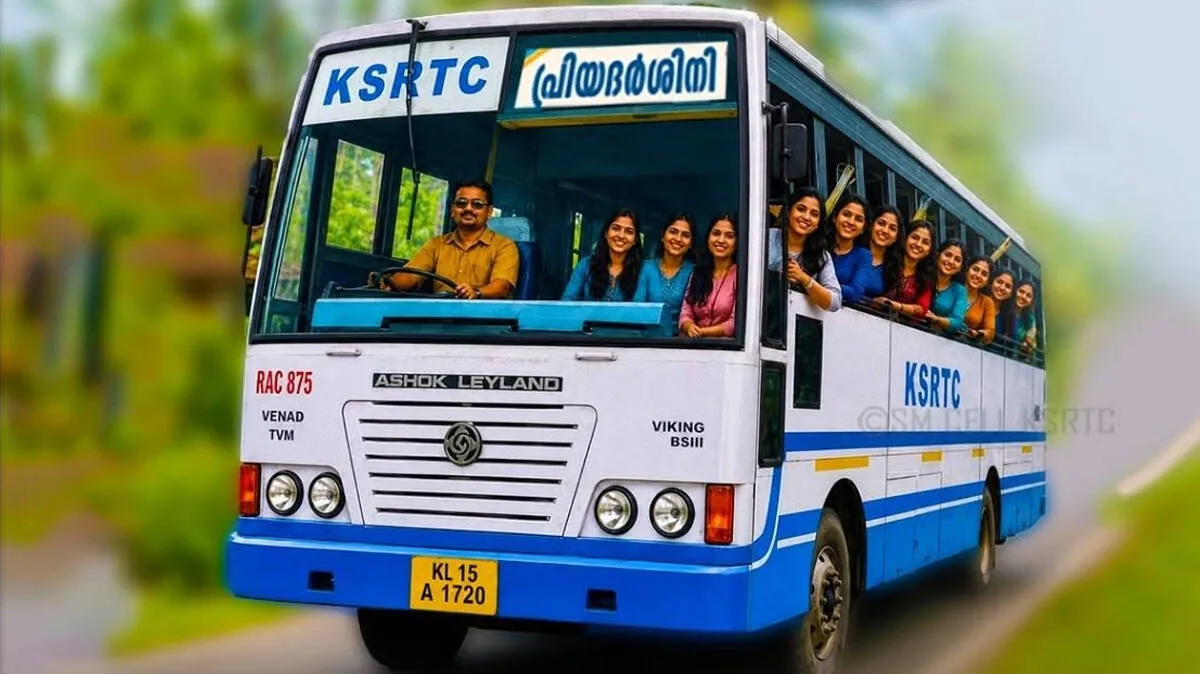
THIRUVANANTHAPURAM: Survey results indicated gender disparity regarding work-related travel and transportation costs in the country. This information came from the latest ‘National Household Travel Survey’ conducted by the central National Statistical Office (NSO). The NSO collected data from 2.03 million individuals across more than 492,000 households nationwide between July 2025 and June 2026.
While 61.9 per cent of men travel more than one kilometre for work, only 41.9 per cent of women do so. In rural areas, 37.7 per cent of women and 59.6 per cent of men travel for work; in urban areas, the figures are 52.9 per cent for women and 66.6 per cent for men.
While a male worker spends an average of Rs 835 per month on commuting, the average expenditure for a female worker is only Rs 533. In rural areas, men spend Rs 674 on travel, whereas women spend just Rs 307. Low wages and financial constraints are the reasons why women do not opt for workplaces located far away. Furthermore, buses serve as the primary mode of transport for 29.5 per cent of students for daily commutes and for 55.8 per cent for night-time travel.
This is where the Priyadarshini scheme implemented by the government of Kerala comes into prominence. The scheme offers relief regarding the financial challenges faced by women across the country. Under this initiative, women are granted free travel on KSRTC Ordinary, Limited Stop, and Town-to-Town buses. Surveys indicate that this helps ordinary women save between Rs 500 and Rs 1,000 per month on travel expenses.
This scheme also helps women utilise this money for their families. It is assessed that the Priyadarshini scheme succeeded in boosting workforce participation. Furthermore, free bus travel offers women who do not own two-wheelers or cars the opportunity to travel with greater freedom. Surveys indicate that Kerala's Priyadarshini scheme is fostering women's workforce participation and economic self-reliance by reducing their travel expenses.










 HOME
HOME LATEST
 NOTIFIED NEWS
 POLL
POLL KERALA
  EDITORIAL
  INDIA
INDIA  WORLD
WORLD  BUSINESS
  CINEMA
  SPORTS
  LIFESTYLE
  SPECIAL
  SCIENCE & TECHNOLOGY
 |
|