


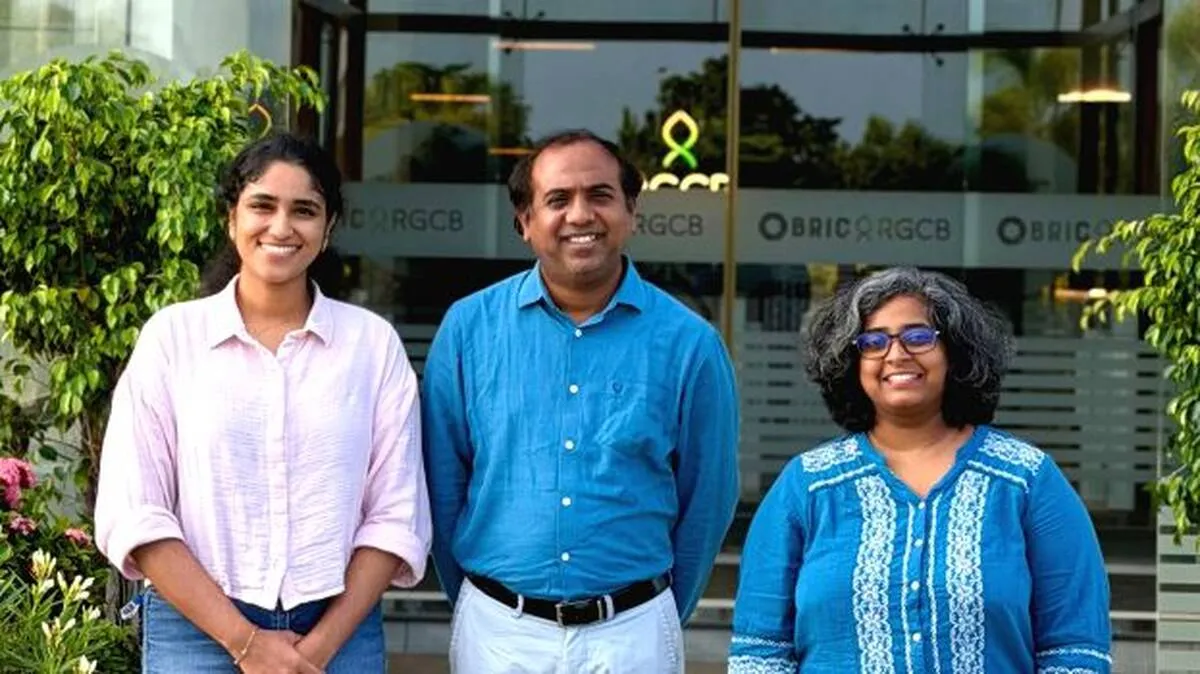
THIRUVANANTHAPURAM: Researchers at the Rajiv Gandhi Centre for Biotechnology (RGCB) in Thiruvananthapuram have developed a new technology that could help detect neurodegenerative diseases such as Parkinson’s disease and amyotrophic lateral sclerosis (ALS) at an early stage.
The technology, called nanopore sensing, was developed by a team led by Dr K.R. Mahendran of RGCB, along with PhD student Varsha Shaji and Dr Neethu Puthumadathil. The findings have been published in the reputed scientific journal Nature Nanotechnology.
RGCB director Dr Beena Pillai said the discovery could also help in developing technologies for the early detection of diseases, including cancer.
The technology detects the risk of neurological diseases by identifying biological markers in the body using nanopore sensors. There is currently no system to identify the biomarkers associated with Parkinson’s disease at an early stage. To address this, the research team developed self-assembling dual-diameter nanopore sensors that can identify these biomarkers with high accuracy.
The research was carried out in collaboration with Dr Ulrich Kleinekathöfer of Constructor University in Germany and Dr Krishnananda Chattopadhyay of the CSIR-Indian Institute of Chemical Biology in Kolkata.
The research was funded by the central government's Department of Biotechnology, Department of Science and Technology, Indian Council of Medical Research (ICMR) and Council of Scientific and Industrial Research (CSIR).














 HOME
HOME LATEST
 NOTIFIED NEWS
 POLL
POLL KERALA
  EDITORIAL
  INDIA
INDIA  WORLD
WORLD  CINEMA
  SPORTS
  LIFESTYLE
  SPECIAL
  SCIENCE & TECHNOLOGY
 |
|