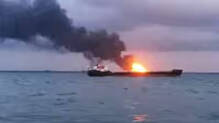


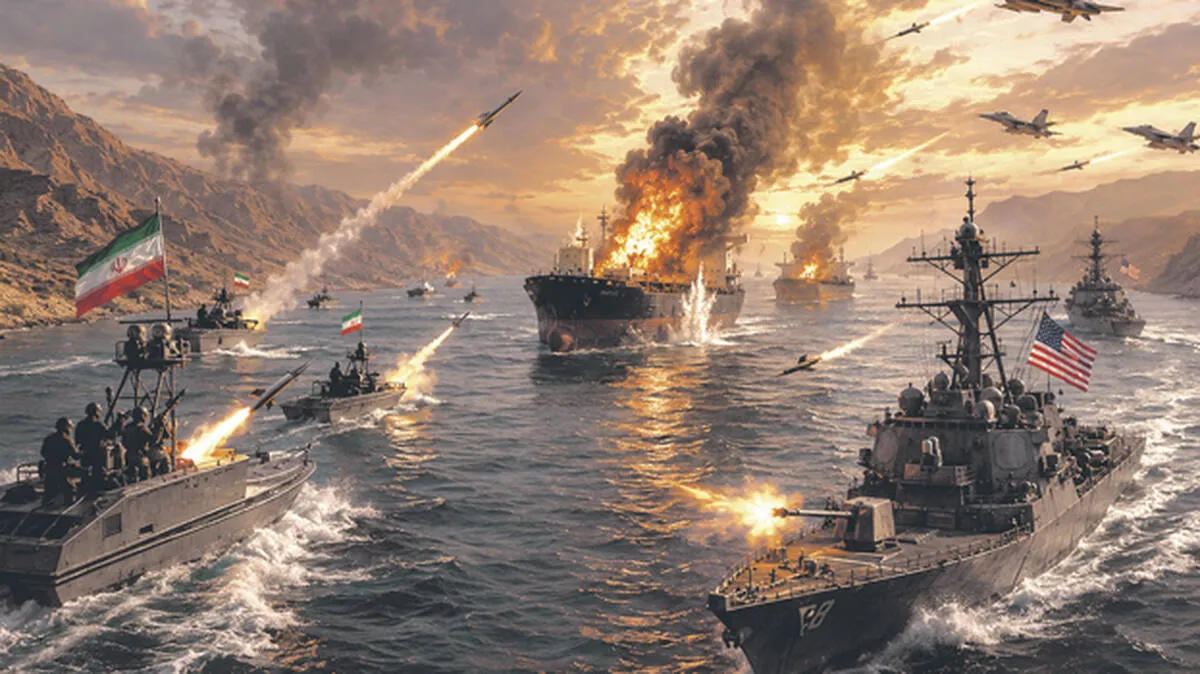
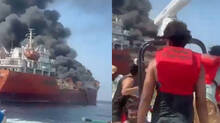
TEHRAN: The security situation in West Asia deteriorated significantly following a series of military engagements between Iran and the United States, centered around the strategic Strait of Hormuz. Early yesterday, Iranian forces attacked a commercial vessel, the Cyprus-registered GFS Galaxy, which was situated approximately nine nautical miles off the coast of Oman. The attack left the vessel with extensive damage, including to its engine room.
Ten Indian crew members were rescued following the incident, but one Indian sailor remains missing. The Indian Embassy in Muscat confirmed it is coordinating with Omani authorities to conduct search and rescue operations. India’s Ministry of External Affairs has condemned the attack on the civilian ship, emphasizing the need for an immediate de-escalation of tensions. Iran defended its actions, alleging that the vessel had deviated from recognized maritime routes and had ignored multiple warnings. A second, unnamed vessel was also targeted by Iran, though no casualties were reported in that instance.
In a decisive counter-offensive, United States military forces launched airstrikes targeting 140 locations across southern Iran. The strikes, which targeted military installations, air defense systems, and port facilities, resulted in significant destruction in areas including Bandar Abbas, Sirik, Chabahar, and Bushehr. Reports indicate that the strikes resulted in numerous casualties.
The conflict expanded further as Iran launched a retaliatory wave of drones and ballistic missiles targeting US bases and radar networks across Bahrain, Kuwait, Qatar, Oman, the United Arab Emirates, and Jordan. While US defenses intercepted many of the incoming projectiles, falling debris caused damage to the US naval logistics center at the Duqm port in Oman. Additionally, three individuals, including a child, sustained injuries in Doha, Qatar. In response to the regional volatility, Oman has summoned the Iranian ambassador to formally register its protest.
The ongoing hostility marks a deepening of the conflict that began on February 28, initially centered on disputes regarding Iran’s nuclear program before shifting to the strategic control of the Strait of Hormuz. Iran has asserted its control over the waterway and has signaled intentions to potentially levy charges on passing vessels in the future. In contrast, the United States has declared that the Strait of Hormuz is an international waterway and has vowed to protect the freedom of navigation.
The Islamic Revolutionary Guard Corps issued a statement declaring that ships attempting to bypass them would be treated as hostile targets and engaged accordingly. Meanwhile, US Defense Secretary Pete Hegseth warned of further repercussions, stating that Iran would face the consequences for its decisions. As the situation remains fluid, international observers remain concerned about the potential for further regional instability.










 HOME
HOME LATEST
 NOTIFIED NEWS
 POLL
POLL KERALA
  EDITORIAL
  INDIA
INDIA  WORLD
WORLD  BUSINESS
  CINEMA
  SPORTS
  LIFESTYLE
  SPECIAL
  SCIENCE & TECHNOLOGY
 |
|