

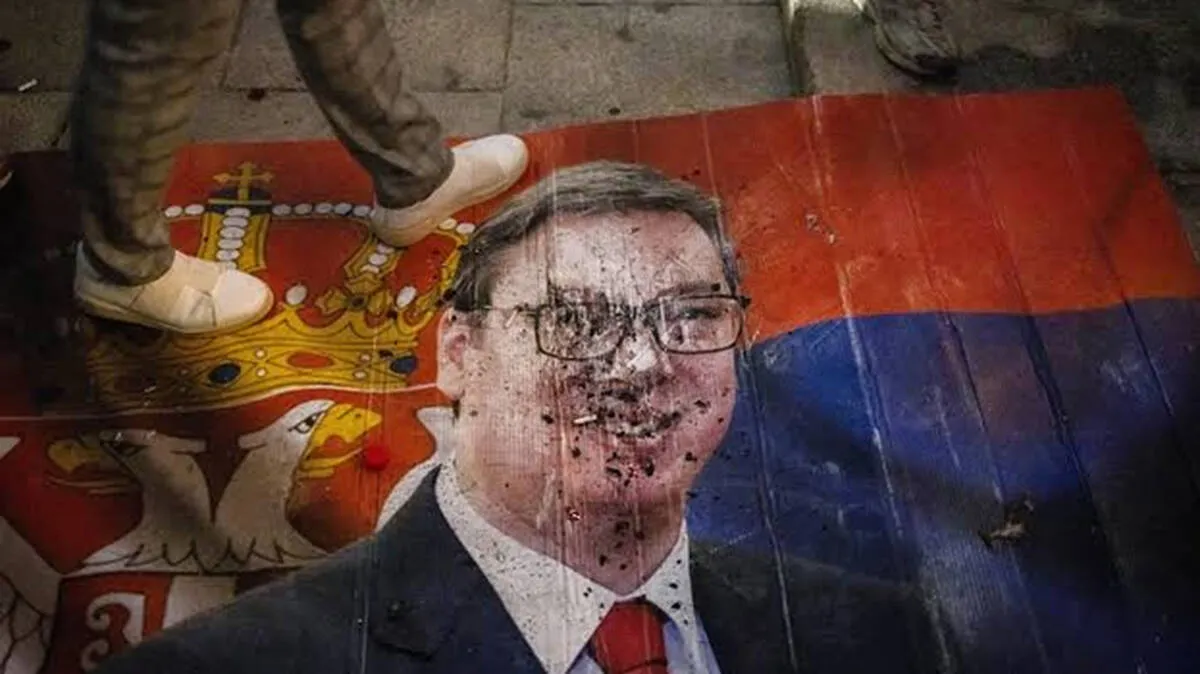
BELGRADE: Serbia’s student-led opposition movement, known as the Student List, has defeated the ruling alliance led by President Aleksandar Vučić’s Serbian Progressive Party (SNS) in the snap parliamentary election, according to preliminary results. The result marks a major setback for Vučić, 56, who became prime minister in 2014 and president in 2017. His political camp has dominated Serbian politics since 2012.
According to preliminary projections, the Student List secured around 140 of the 250 seats in Parliament, while the SNS-led alliance was projected to win 103 seats. The Student List brought together students, activists, professionals, academics and personalities from the arts and sports fields.
Vučić resigned as president before the election and sought to retain power by positioning himself as the SNS alliance’s candidate for prime minister. Parliament Speaker Ana Brnabić took over as acting president.
The snap election was held to elect a new Parliament and determine the next government. The first round of the presidential election was expected to take place by the end of December 2026, according to Vučić.
The Student List contested the election without announcing an official candidate for prime minister. Ilija Srđanović, a 56-year-old physician and professor who headed the movement’s electoral slate, emerged as a prominent figure, although the movement had not formally designated him as its prime ministerial candidate. The movement grew out of nearly two years of anti-government protests, driven primarily by allegations of corruption and demands for accountability.
The parliamentary election had been expected in 2027 but was brought forward amid sustained anti-government demonstrations.
The protests began after the collapse of a railway station canopy in Novi Sad on November 1, 2024, killed 16 people. The disaster triggered widespread public anger and demands for accountability, with students playing a leading role in the demonstrations.
Vučić, who became president in 2017 and subsequently won a second term, could not seek a third consecutive presidential term under Serbia’s constitutional limits. He therefore sought the prime minister’s post, which does not carry the same presidential term restriction.
Vučić’s supporters credit him with maintaining stability, promoting economic growth and attracting foreign investment. His government has also pursued Serbia’s bid for European Union membership while maintaining close relations with Russia.
Critics, however, accuse his administration of undermining media freedom and failing to adequately address corruption allegations. These controversies, along with public anger following the Novi Sad disaster, fuelled the protests that ultimately dealt his ruling alliance a major electoral setback.












 HOME
 LATEST
 NOTIFIED NEWS
 POLL
 KERALA
 EDITORIAL
 INDIA
 WORLD
 BUSINESS
 CINEMA
 SPORTS
 LIFESTYLE
 SPECIAL
 SCIENCE & TECHNOLOGY

 |