

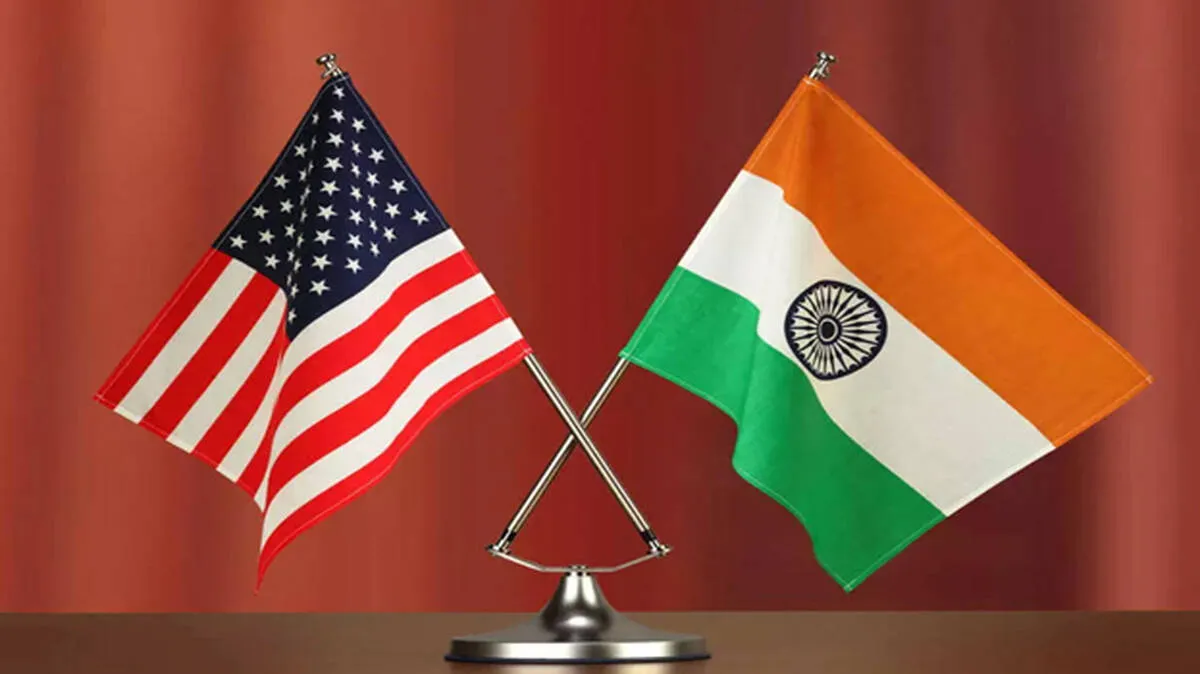
The argument over the India-US trade agreement has reached an unhappy stage. Both sides are certain, and neither can prove its case. The Commerce Minister says sensitive agricultural and dairy products are fully protected. Farm organisations say the concessions are wider than admitted. Both may be partly right. The dispute cannot be settled by press conference. It can be settled only by the schedules.
The joint statement of 6 February 2026 committed India to eliminate or reduce tariffs on all US industrial goods and a "wide range" of food and agricultural products. The named items are dried distillers' grains (DDGs), red sorghum for animal feed, tree nuts, fresh and processed fruit, soybean oil, and wine and spirits. India also agreed to address long-standing non-tariff barriers to US farm trade. The Government states that dairy and sensitive staples are kept out.
Two phrases deserve an auditor's attention. The first is "additional products". In any contract, the open category is where the value tends to sit, and nothing in the public domain tells us what it contains. The second is the commitment on non-tariff barriers. A dairy tariff line can remain untouched while certification and sanitary rules are quietly eased. An exclusion is only as good as the legal text that records it. That the White House revised its own fact sheet within three days, dropping a reference to pulses, shows how fluid the descriptions have been.
Four things must therefore be read in the text, not inferred from statements: the exact tariff lines, the pace at which duties fall, any quota volumes or minimum import prices, and the safeguards India retains.
The risk is not always on the line that is formally opened. Soybean oil is the clearest case. India imports more than half of its edible oil requirement, and the national effort to raise oilseed output depends on remunerative domestic prices. Preferential access for US soybean oil may help consumers in the short run. It can also undercut the very farmers that mission is meant to support.
DDGs work by substitution. Maize is broadly self-sufficient, and its tariff line is not being liberalised. Yet cheaper DDGs can displace domestic maize and soymeal in the feed market all the same. The poultry industry gains from lower feed costs; the maize and soybean grower bears the adjustment. Policy must follow the substitution, not merely the tariff line.
Apples and tree nuts are the most exposed. Domestic production is limited and has long sheltered behind high duties. Growers in Jammu and Kashmir and Himachal Pradesh will feel any steep reduction quickly, unless it is cushioned by a minimum import price or a tariff-rate quota.
There is also the matter of subsidy. US producers draw direct payments and heavily supported crop insurance. That support can leave American produce cheaper at the Indian port even after residual duty. India's farm support is substantial in aggregate, but differently structured and far smaller per farmer. An assessment that ignores this asymmetry is incomplete.
The ability to restore duties after a sudden import surge is not a technical footnote. For a developing economy, it is the principal line of defence. A general safeguard route requires an investigation and can take months, by which time the price damage is done. A bilateral safeguard with defined price and volume triggers, invoked within days and backed by a clear consultation and dispute-resolution procedure, is a different instrument altogether. Which of these India has secured is perhaps the single most important fact still undisclosed.
It would be equally wrong, however, to treat every concession as surrender. Exporters of tea, coffee, spices, marine products and certain fruits stand to gain from better access to the US market. For Keralam's plantation and spice economy, that opening is worth securing. It does not justify haste on the import side, where other producers face competition they are not yet equipped to meet.
Four things follow.
First, publish the agricultural schedules, the staging of reductions and the quota volumes before signature, not after.
Second, write a bilateral safeguard into the text, with objective triggers, a short invocation period and a named forum for disputes.
Third, protect the exposed lines through minimum import prices or tariff-rate quotas for apples and nuts, and stage any cut on soybean oil over a period tied to measurable oilseed productivity targets.
Fourth, place the text before the Parliamentary Standing Committee on Commerce and consult the States. Treaty-making is a Union subject, but agriculture is a State subject. The States will carry the consequences, and they should see the terms.
A Swadeshi approach is not a refusal to trade. It is a demand that opening be sequenced with domestic capacity, especially where millions of livelihoods are at stake. Trade agreements are frameworks, not guarantees. They cannot substitute for higher productivity, better processing, or the obligation of transparency.
An agreement whose farm consequences rest on declaration rather than text is not ready to be signed. Publish first. Then sign.
(Views are personal. The author is a chartered accountant and holds an LLM in Alternative Dispute Resolution. ranjit@karthikeyan.ca)















 HOME
 LATEST
 NOTIFIED NEWS
 POLL
 KERALA
 EDITORIAL
 INDIA
 WORLD
 BUSINESS
 CINEMA
 SPORTS
 LIFESTYLE
 SPECIAL
 SCIENCE & TECHNOLOGY

 |