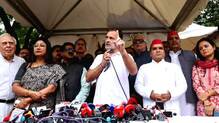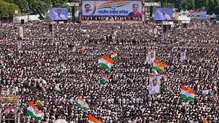


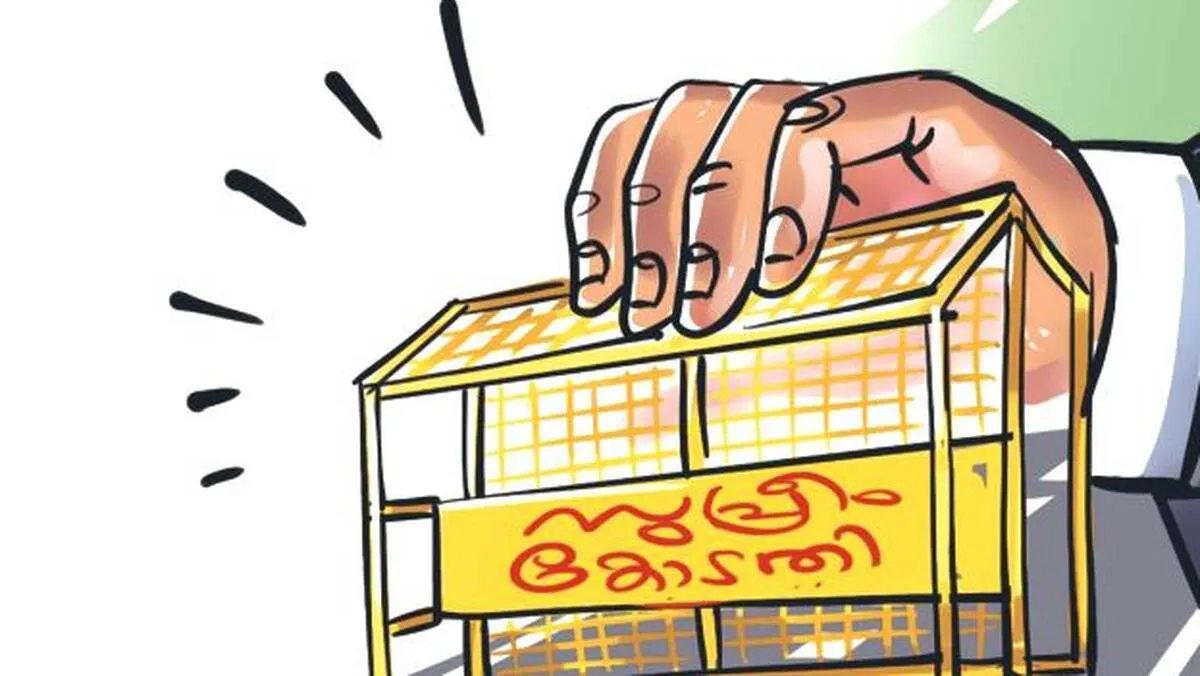
NEW DELHI: The Supreme Court has made an important observation that no group has the right to occupy a designated protest site indefinitely. The court said that authorities must impose time limits while granting permission for protests at designated locations. Such places should be allotted only for a specific period. The observation came after Solicitor General Tushar Mehta informed the court that the CJP had been granted permission to stage a protest at Delhi's Jantar Mantar for one day in July but continued to occupy the site for 17 days.
A bench comprising Chief Justice of India Surya Kant and Justices Joymalya Bagchi and V Mohana observed that the right to protest does not belong to any single organisation. Everyone has the constitutional right to protest. No group can claim that others should not be allowed to enter a particular place simply because it is already holding a protest there.
The court noted that farmers, workers and other sections of society should also have the opportunity to stage protests at designated protest sites. It also directed the police to inform organisers in writing of the reasons whenever permission for a protest is either granted or denied.
The Supreme Court was hearing a batch of petitions related to protests in Delhi. Traders' associations informed the court that repeated protests in the capital had caused losses worth crores of rupees. They also sought a ban on all protests for the next two months.
The court observed that the issue involved a balance between the right to carry on business and the right to freedom of expression. It also expressed concern about the difficulties faced by street vendors and small businesses.
The Chief Justice directed that the political parties and organisations that had called for the protests be made parties to the petitions, adding that they too must be heard.
1. Solicitor General Tushar Mehta said Jantar Mantar is a public road and cannot be treated as a permanent protest site. He also argued that organisers should be held responsible for the consequences of their protests. Opposition parties maintained that protests are an integral part of democracy.
2. The court also considered a petition filed by the Kerala Union of Working Journalists (KUWJ) alleging police assault on Malayalam journalists during a protest. It directed that notices be issued to the Centre and Delhi Police.
The Supreme Court also ordered notices on a petition filed by a group of lawyers against the INDIA bloc's march to the Supreme Court on October 12. The court sought responses from Lok Sabha Leader of Opposition Rahul Gandhi, Congress president Mallikarjun Kharge and the Central government, among others. The matter will be considered again on the 23rd.













 HOME
 LATEST
 NOTIFIED NEWS
 POLL
 KERALA
 EDITORIAL
 INDIA
 WORLD
 BUSINESS
 CINEMA
 SPORTS
 LIFESTYLE
 SPECIAL
 SCIENCE & TECHNOLOGY

 |