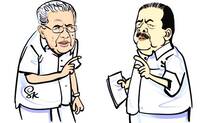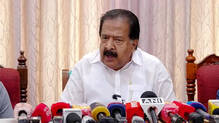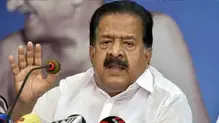



THIRUVANANTHAPURAM: The merger of various departments into the Local Self-Government Department (LSGD), carried out during the previous government's tenure, has reportedly backfired. The restructuring, introduced with the aim of making public services faster, more convenient and transparent, is said to have worsened the situation instead. Both employees and the public are dissatisfied, and the merger has also allegedly contributed to an increase in corruption in the administration of local self-government institutions.
Against this backdrop, the government has constituted a committee comprising the department secretary and special secretary to examine the drawbacks of the merger and the possibility of splitting the department again. Further action will be taken after the committee submits its report.
The Local Self-Government Department was formed in 2021 by merging the Rural Development Department, Urban Affairs Department, Town and Country Planning Department, Local Self-Government Engineering Wing and Panchayat Department. The merger brought under a single minister departments that had previously been handled by three ministers. Its objectives were to improve the efficiency of institutions, streamline employee administration and improve the availability of services to the public.
However, reports suggest that none of these objectives has been achieved even after five years. People are still not receiving services properly, while processes ranging from building permits to planning projects have also been thrown out of gear.
Employees are particularly dissatisfied with the merger. Provisions introduced during the restructuring concerning protection of seniority, protection against inter-disciplinary transfers and promotion norms were allegedly ignored.
Employees who had been handling responsibilities under the Panchayat Raj Act were transferred to corporation offices, while those who had worked in municipalities were posted to panchayats. Their lack of experience in these new areas of work affected the services provided to the public, resulting in numerous complaints.
The government was also forced to pay the salaries of around 30,000 LSGD employees directly from the state exchequer. Previously, their salaries were paid from the respective local bodies' own funds. With the salary liability removed from local bodies, their interest in generating own-source funds declined, a situation alleged to have created scope for corruption.
The formation of a 20-member employees' cell in the Local Self-Government Department to study pay revision has also triggered controversy. Such an arrangement had never been introduced before.
Of the 20 members, 16 were drawn from the Panchayat Department. The Rural Development, Urban Affairs, Town and Country Planning, and Local Self-Government Engineering departments had only one representative each. Moreover, those representatives belonged to the non-supervisory cadre. This composition led to complaints.
A person who had served as the minister's Additional Private Secretary (APS) during the previous government's tenure was appointed as the cell's Nodal Officer. This appointment also drew political opposition.
As a result, the formation of the cell was thrown into disarray. Such complications had not arisen when salaries were paid from the local bodies' own funds. The cell was constituted to submit a report to the Pay Revision Commission.














 HOME
 LATEST
 NOTIFIED NEWS
 POLL
 KERALA
 EDITORIAL
 INDIA
 WORLD
 BUSINESS
 CINEMA
 SPORTS
 LIFESTYLE
 SPECIAL
 SCIENCE & TECHNOLOGY

 |