


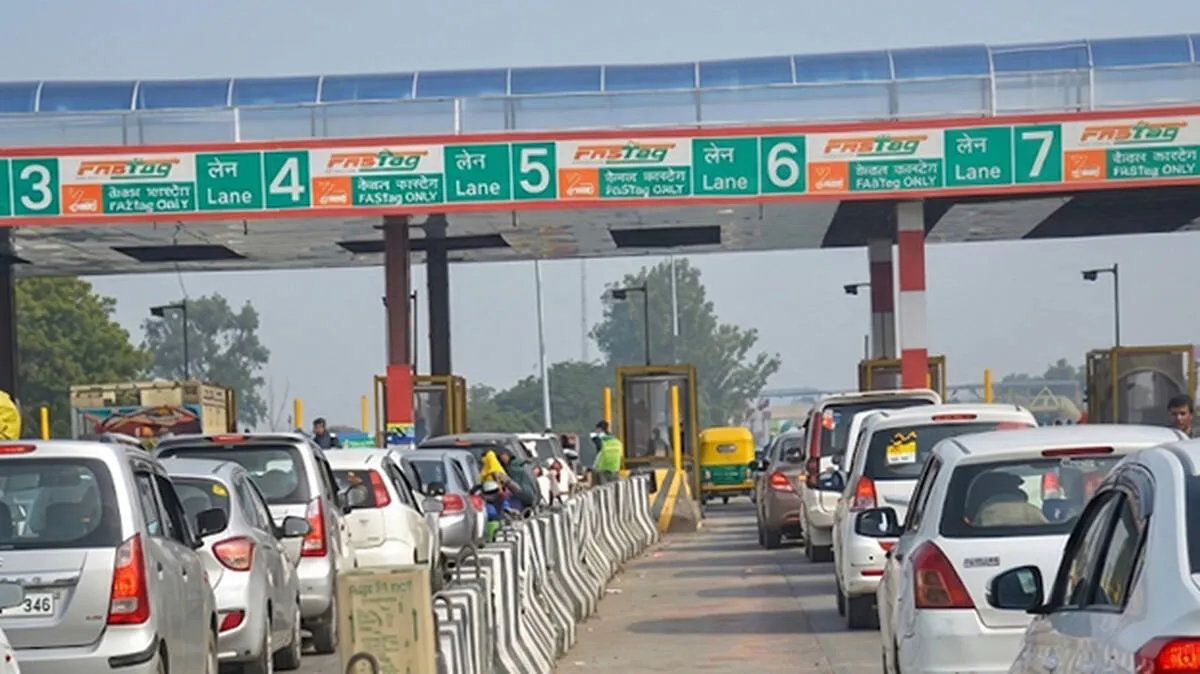
THIRUVANANTHAPURAM: Toll collection at all 11 toll plazas on Kerala's NH-66 is set to become barrier-free from April, ending the need for vehicles to stop at toll points.
The move is part of the Centre's transition to a Multi-Lane Free Flow (MLFF) tolling system, under which vehicles can pass through toll points without stopping or slowing down. The system uses cameras, sensors and FASTag-based electronic toll collection to identify vehicles and automatically collect the applicable toll.
Automatic Number Plate Recognition (ANPR) cameras will identify vehicles, while FASTag will be used for electronic toll collection. The system is designed to allow vehicles to pass through toll points at highway speeds without conventional toll barriers.
If a FASTag cannot be used for payment because of insufficient balance or an invalid or non-functional tag, an electronic notice will be issued to the vehicle owner. The normal toll can be paid within 72 hours of the notice. If payment is not made within that period, the applicable toll will be charged at twice the normal rate.
The existing toll infrastructure will be modified for the new system, with cameras, FASTag readers and other equipment installed to identify and track vehicles. The system is designed to require minimal human intervention.
The move is expected to reduce waiting time, fuel consumption and congestion at toll plazas. According to the Ministry of Road Transport and Highways, the average time taken by a vehicle to cross a toll plaza had fallen to 40 seconds under electronic toll collection, compared with 12.23 minutes under the earlier manual system.
The Centre is also working towards nationwide implementation of the barrier-free system. Union Minister for Road Transport and Highways Nitin Gadkari has said the MLFF system is expected to be implemented across the country by February-March 2027, with 60% to 70% of the work expected to be completed by the end of 2026.
India's first MLFF barrier-less tolling system was launched at the Chorayasi Toll Plaza on NH-48 in Gujarat in May 2026. The system has since been introduced at additional toll plazas as part of the national rollout.
The wider shift to FASTag-based digital toll collection is estimated to provide an annual benefit of ₹20,000 crore to ₹25,000 crore to the government, according to Gadkari.
The figure relates to the broader financial benefit of the FASTag transition compared with the earlier toll collection system and does not represent additional revenue generated solely by the new MLFF system.














 HOME
HOME LATEST
 NOTIFIED NEWS
 POLL
POLL KERALA
  EDITORIAL
  INDIA
INDIA  WORLD
WORLD  BUSINESS
  CINEMA
  SPORTS
  LIFESTYLE
  SPECIAL
  SCIENCE & TECHNOLOGY
 |
|