

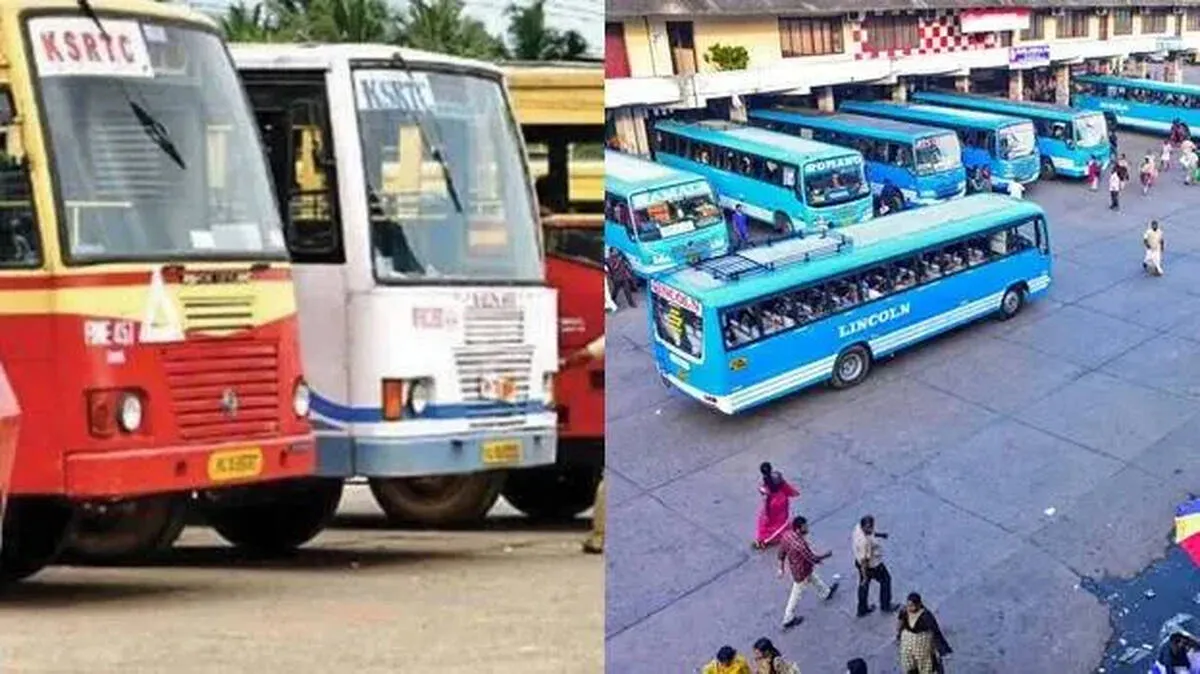
THIRUVANANTHAPURAM: The Kerala government will constitute an expert committee to study the deepening financial crisis in the state's private bus sector, which has intensified following the implementation of the free travel scheme for women in the state-run Kerala State Road Transport Corporation (KSRTC). In a bid to resolve the ongoing deadlock, the Transport Minister has convened a meeting with various private bus owner associations on the 13th, with subsequent government actions to be formulated based on the committee's final report.
Bus operators have demanded that their representatives be included in the proposed expert panel to ensure their operational challenges are adequately addressed. During the upcoming meeting with the minister, the associations are expected to raise a series of pressing demands, including an upward revision of student concession fares to help mitigate mounting losses.
Detailing the severe financial strain on the sector, operators noted that a private bus running at least nine services a day in rural areas incurs a daily diesel expense of ₹4,500 to ₹5,000, given an average fuel efficiency of just 3.5 kilometers per litre. While daily revenues previously reached up to ₹9,000, they have now plummeted to an average of ₹6,000 to ₹7,000. Industry representatives attribute this sharp decline to the combination of skyrocketing fuel prices and the rollout of the KSRTC's Priyadarshini scheme, which provides free transit to women.
In addition to escalating fuel costs, bus owners must manage daily staff wages ranging from ₹1,000 to ₹1,200 per vehicle, alongside substantial overheads for loan repayments, taxes, insurance, and routine maintenance. Although the state government recently implemented a reduction of ₹130 to ₹150 in the daily tax levied on these vehicles, operators maintain that the concession has failed to provide any substantial relief against their soaring operational deficits.
To sustain the private transport sector, the associations are urging the government to extend the funded free travel scheme for women to private buses, with the state exchequer reimbursing the operational costs. Furthermore, they have requested immediate policy intervention to supply diesel at subsidised rates for private stage carriage operators to ensure the long-term viability of their services.









 HOME
HOME LATEST
 NOTIFIED NEWS
 POLL
POLL KERALA
  EDITORIAL
  INDIA
INDIA  WORLD
WORLD  BUSINESS
  CINEMA
  SPORTS
  LIFESTYLE
  SPECIAL
  SCIENCE & TECHNOLOGY
 |
|