

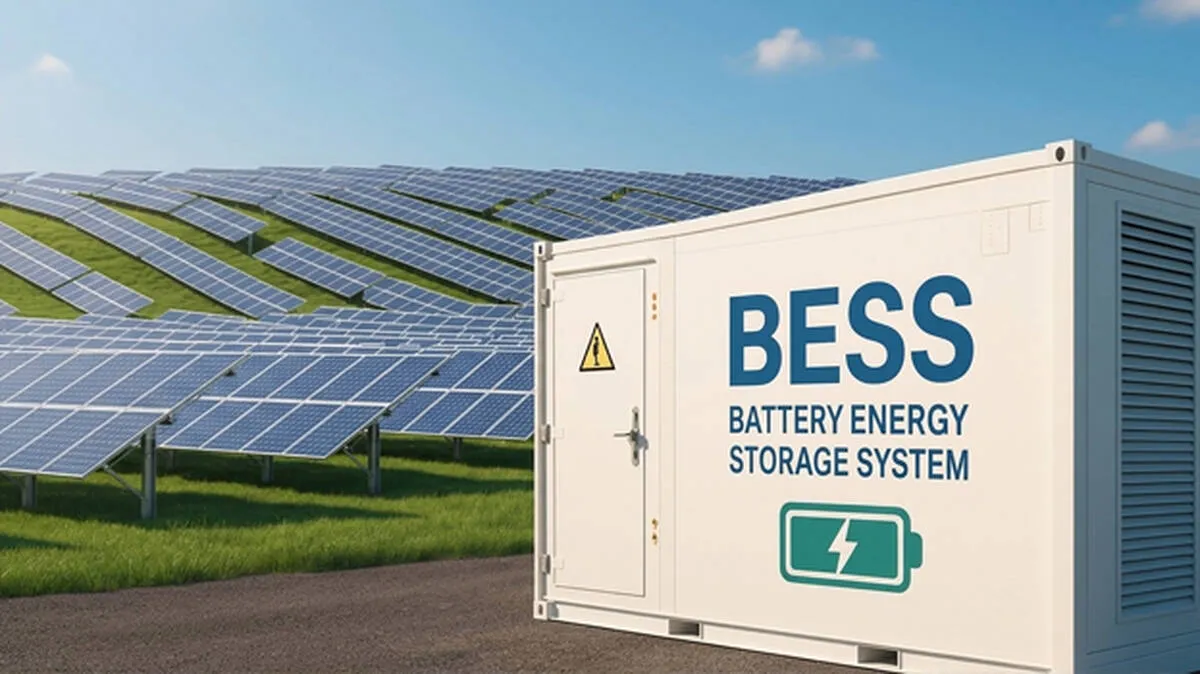
THIRUVANANTHAPURAM: The Kerala State Electricity Regulatory Commission has directed the Kerala State Electricity Board (KSEB) to scale up the deployment of Battery Energy Storage Systems (BESS) across the state. The move is aimed at storing surplus daytime solar energy to meet the high demand during peak night hours, offering a sustainable solution to the state's recurring power crisis.
The directive was issued in an order granting approval for a new BESS facility at Brahmapuram, where the Commission emphasised the critical need for battery storage infrastructure in Kerala. With the state currently spending up to ₹13,000 crore annually on external power purchases, the regulator noted that widespread adoption of BESS could significantly lower power procurement costs.
Peak-hour power costs expected to halve
Currently, KSEB relies heavily on round-the-clock (RTC) power purchase agreements. During peak hours, buying electricity from external grids costs the state up to ₹10 per unit. In contrast, power drawn from BESS is projected to cost between ₹5 and ₹6 per unit.
Additionally, under existing arrangements, KSEB often has to pay fixed charges to return surplus daytime power to generating companies. The expansion of localised storage systems is expected to eliminate these redundant operational expenses.
Managing surging solar generation
Solar power generation in Kerala has seen a substantial increase, but the state currently lacks the infrastructure to store the excess energy generated during midday. Under the proposed expansion, surplus power—including the electricity fed back into the grid by prosumers (consumers with rooftop solar)—will be routed to BESS units.
These storage systems are being developed through both public and private sector participation. Five such facilities are already operational in the state, making the upcoming Brahmapuram project the sixth. KSEB will procure power from these operators based on pre-determined tariff rates.
Backed by central policy and funding
The state's shift toward battery storage aligns with the Central Government's policy push for renewable energy integration. The Union Budget allocated ₹5,400 crore to promote battery storage initiatives, covering projects across 15 states, including Kerala, alongside National Thermal Power Corporation (NTPC) ventures. The financial assistance from the Centre will be disbursed as Viability Gap Funding (VGF), lowering the capital burden on the state.













 HOME
HOME LATEST
 NOTIFIED NEWS
 POLL
POLL KERALA
  EDITORIAL
  INDIA
INDIA  WORLD
WORLD  BUSINESS
  CINEMA
  SPORTS
  LIFESTYLE
  SPECIAL
  SCIENCE & TECHNOLOGY
 |
|