

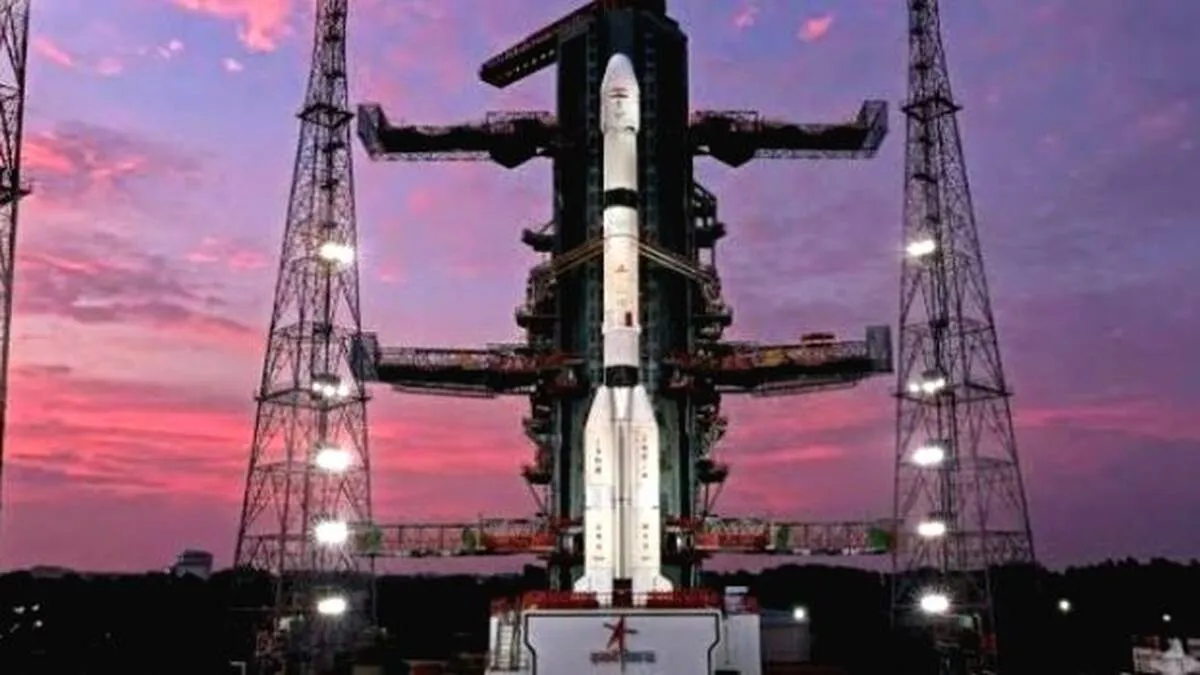
THIRUVANANTHAPURAM: NVS-03 satellite reached its orbit, and for India, it is a major milestone in navigation. Mobile phones will now be able to access Indian PNT (Positioning, Navigation, and Timing) services—a success that marks the culmination of a quarter-century of effort by ISRO.
ISRO began its attempts to launch NVS-03 satellites in 2006. However, the mission faced setbacks when the foreign-made atomic clocks failed. Subsequently, the Space Applications Centre in Ahmedabad developed its own atomic clock, which paved the way for success.
During the Kargil War in 1999, India was denied access to American GPS services. In response, the then-Vajpayee government decided that India should develop its own independent system of this kind.
India’s NavIC system operates through a network of atomic clocks—located in Guwahati, Bengaluru, Ahmedabad, Faridabad, and Bhubaneswar—and four satellites in orbit.
Global navigation systems include America’s GPS, Russia’s GLONASS, and China’s BeiDou. The systems belonging to Russia and America are controlled by their respective military branches, while China does not extend its service to other nations.
America’s GPS has a coverage radius of 20,000 kilometres, with a total global positioning range of 36,000 kilometres. India’s NavIC operates within a range of 1,500 kilometres; however, it offers superior accuracy—double that of the American GPS. Accuracy is set to improve further once ISRO launches two additional NavIC satellites. NavIC has the capacity to provide navigation services to 40,000 fishing vessels and 10,400 trains simultaneously.
Thomas Kurian, a native of Mavelikkara in Alappuzha, serves as the Mission Director for this launch. After completing his education in Malayalam-medium schools in his home state, he earned a degree in Mechanical Engineering from TKM College, Kollam, graduating with a gold medal. He joined the Vikram Sarabhai Space Centre (VSSC) in November 1992 and became the Project Director for the GSLV program in June 2024. Kurian currently resides in Pongummoodu, Thiruvananthapuram.
His wife is Dr Susy Joseph, a Professor of Paediatrics at the Thiruvananthapuram Medical College. They have two children: Dr Sheba Ann Thomas (an MD student) and George Kurian Thomas (a computer engineer).














 HOME
 LATEST
 NOTIFIED NEWS
 POLL
 KERALA
 EDITORIAL
 INDIA
 WORLD
 BUSINESS
 CINEMA
 SPORTS
 LIFESTYLE
 SPECIAL
 SCIENCE & TECHNOLOGY

 |