


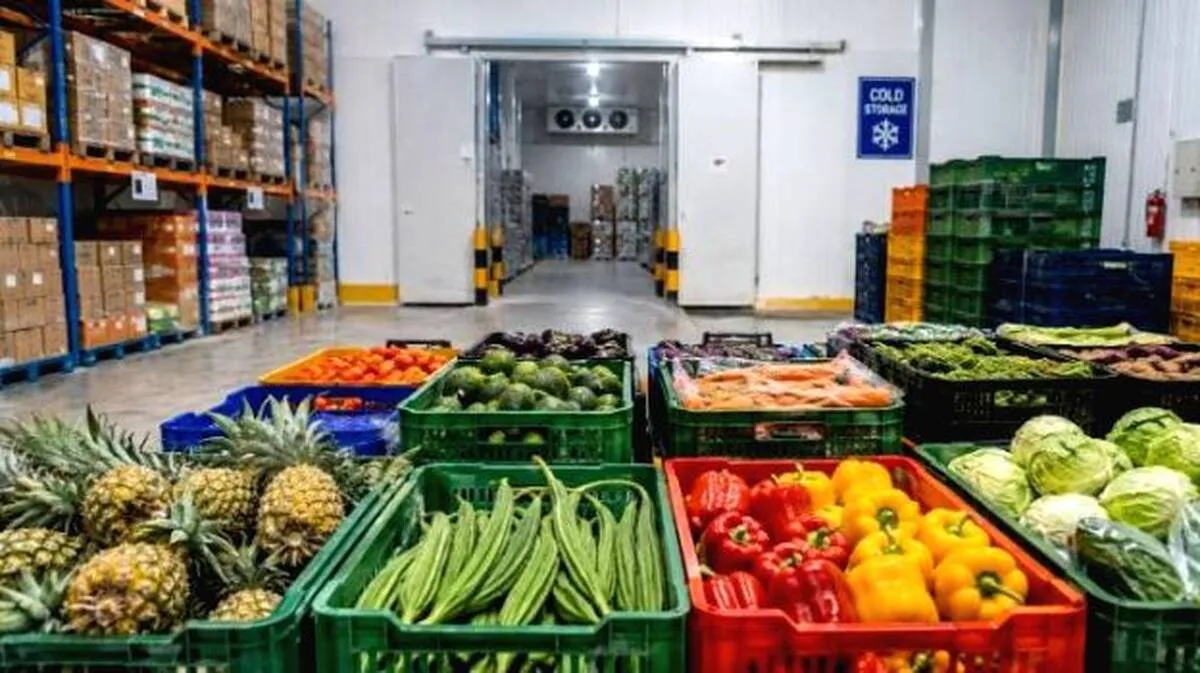
Walk through almost any Kerala market during the peak harvest season and the pattern is painfully familiar. Pineapple, banana, tomato and vegetables arrive in abundance. Prices fall sharply. Farmers must either sell in haste or watch part of the harvest perish. A few months later, the same produce becomes scarce and expensive. The cycle repeats, with the farmer bearing the loss during abundance and the consumer paying more during scarcity.
Small food-processing businesses are caught in the same cycle. Units producing pickles, purees, spice preparations, ready-to-cook products, dried foods and packaged vegetables require a dependable supply of raw materials at reasonably stable prices. Instead, they must buy cheaply and quickly during harvest, without adequate facilities to preserve what they purchase, or pay substantially higher prices during the lean season.
Large companies can source from several states, maintain private storage networks and absorb temporary price shocks. Most local micro, small and medium enterprises cannot. What appears to be a seasonal inconvenience is, therefore, a structural weakness that depresses farm incomes and prevents a stronger food-processing industry from taking root in Kerala.
The scale of the national problem is well documented. The NABCONS study commissioned by the Union Ministry of Food Processing Industries estimated harvest and post-harvest losses at between 6.02 and 15.05 per cent for fruits and between 4.87 and 11.61 per cent for vegetables. Plantation crops and spices also suffer losses, though at comparatively lower levels. Across the country, the economic value of produce lost between the farm and the consumer runs into tens of thousands of crores of rupees.
Kerala’s storage base is particularly modest. Official data recorded 202 cold storages with a combined capacity of 96,655 metric tonnes as of November 2023. Even this headline capacity does not necessarily represent facilities that are appropriately located, technically configured or commercially available for the State’s horticultural crops. Cold storage built for seafood, meat or another specialised product cannot automatically be used for banana, pineapple, tomato or leafy vegetables.
The issue is not merely the number of cold rooms. Different commodities require different treatment. Fruits and vegetables may need sorting, grading, pre-cooling, ripening chambers, humidity control and refrigerated transportation. Spices generally require scientific drying, moisture-controlled warehousing and protection from pests and contamination rather than ordinary refrigeration. A functioning post-harvest system must therefore include pack-houses, commodity-specific cold rooms, drying facilities, warehouses, reefer vehicles and basic processing units.
Without this chain, the market has only one response to a large harvest: sell immediately at whatever price the day offers.
The absence of storage also weakens Kerala’s small processors. A unit may be capable of converting local produce into pickles, pulp, puree, dehydrated products, frozen foods or ready-to-cook preparations. Yet its commercial viability depends on the cost and continuity of raw materials. When prices rise in the off-season, margins disappear. When prices collapse during harvest, the processor may still be unable to purchase and preserve sufficient quantities for later use.
The result is a curious failure. The farmer has produce but cannot wait. The processor has demand but cannot stock. The consumer pays more later, while value that could have remained within Kerala is lost during the harvest itself.
There is a practical way forward. It does not require the reinvention of agriculture. It requires Kerala to treat post-harvest management and primary processing as essential economic infrastructure.
The objective should be to aggregate produce when it is plentiful, grade and preserve it under appropriate conditions, and release it later either as fresh produce or as processed material. Properly designed and commercially managed, such a system can reduce distress selling, moderate seasonal volatility and give processors a more predictable cost base.
Storage, however, is not enough by itself. A farmer’s ability to wait also depends upon finance. Farmers frequently sell immediately because wages, loans and household expenses cannot be postponed. If produce is placed in storage but no credit is available against it, the economic pressure to sell remains unchanged.
Warehouse receipts, pledge finance and short-duration working-capital facilities must therefore form part of the system. Cooperatives, banks and farmer-producer organisations should be able to advance a reasonable portion of the value of produce placed in accredited storage. The farmer can then meet immediate obligations and sell when market conditions are less adverse. Infrastructure creates the physical capacity to wait; finance creates the economic capacity to do so.
Kerala has begun to see investments in temperature-controlled storage, food parks and commodity-specific facilities. These are useful beginnings, but they remain too few, unevenly distributed and insufficiently connected to farmer groups and local processors.
The State needs a denser network of smaller, cluster-level facilities. A pineapple cluster does not require the same infrastructure as a cardamom-growing region. Banana, vegetables, jackfruit, tubers, spices and fish each require different post-harvest systems. Investment must therefore follow the production map rather than a uniform administrative template.
Many of these facilities need not be owned by individual farmers or processors. Shared pack-houses, warehouses, cold rooms and primary-processing centres can operate through farmer-producer organisations, cooperatives, local bodies or professionally managed special-purpose entities. Users can pay according to quantity stored, duration and services used. Solar-assisted refrigeration and energy-efficient equipment may help contain operating costs, which are often more decisive than the initial construction subsidy.
Professional management will be critical. A cold room that is poorly utilised, technically mismanaged or burdened by high electricity costs can quickly become an expensive public asset with little economic value. Facilities must be located after assessing crop volumes, seasonal arrivals, transport access, processor demand and likely utilisation. Their success should be measured not by the number of buildings inaugurated but by occupancy, reduction in losses, farmer realisation and the value of produce processed.
Quality control must also begin at the point of aggregation. Sorting, grading, traceability, hygienic handling and residue testing cannot be added as an afterthought. Storage does not improve poor-quality produce. It merely preserves the condition in which the produce enters the facility. If Kerala expects its farmers and processors to obtain better prices, uniform standards must be built into the chain from the beginning.
The policy instruments already exist. The Integrated Cold Chain and Value Addition Infrastructure component under the Pradhan Mantri Kisan Sampada Yojana supports infrastructure across the supply chain. The PM Formalisation of Micro Food Processing Enterprises scheme supports micro-enterprises, farmer-producer organisations, cooperatives and self-help groups. The Agriculture Infrastructure Fund and horticulture-sector programmes can also assist post-harvest investments.
Kerala does not, therefore, need another isolated subsidy announcement. It needs a district-wise post-harvest infrastructure plan that brings these programmes together around identifiable production clusters. State agencies can facilitate land, dependable power connections, technical approvals and project preparation. Banks can provide investment and working-capital finance. Farmer organisations and processors can anchor demand. Private operators can bring technical and commercial expertise.
The benefits would extend beyond the immediate price received by farmers. Small processors would be able to plan production more reliably. Rural enterprises could operate for longer periods instead of being limited to a brief harvest season. Local brands would have a better chance of achieving consistent quality and scale. Families dependent on agriculture would gain more stable cash flows.
The social consequences may be equally important. Kerala’s farming population is ageing, while many younger people see cultivation as physically demanding and commercially uncertain. A more organised system combining cultivation, aggregation, storage, processing and marketing could create roles in logistics, quality control, food technology, equipment maintenance and rural enterprise. Agriculture would no longer be confined to the act of cultivation alone.
Cold-chain infrastructure is not a guarantee against loss. Poor demand forecasts, high storage charges, interrupted electricity, weak maintenance or the simultaneous release of stocks can still undermine returns. Nor can every crop be stored economically. Decisions must be based on shelf life, price behaviour, storage cost and market demand. The objective is not to hold produce indefinitely or to speculate on prices. It is to give farmers and processors a commercially reasonable alternative to distress.
Kerala will continue to import a substantial share of its food. That reality is unlikely to change quickly. What can change is the proportion of locally grown, high-value produce that reaches consumers without being wasted or sold under compulsion. What can also change is the ability of small processors to use Kerala’s agricultural output rather than depend upon erratic supplies and expensive off-season purchases.
The central failure is the inability to move value across time. When produce must be sold on the day it is harvested, time works against the farmer. When a processor cannot preserve raw material for later use, time works against enterprise. Storage, finance and primary processing can restore a measure of control to both.
Cold rooms and warehouses will not, by themselves, transform Kerala agriculture. But without an effective post-harvest network, the market will continue to punish abundance and reward scarcity. Kerala’s farmers already know how to produce. Its small enterprises know how to add value. What they lack is the infrastructure, finance and organisation needed to store the season.
It is time to put that missing piece in place.
CA. M R Ranjit Karthikeyan BCom., LLM., DISA (ICAI), FCA
Founding Partner, Ranjit Karthikeyan Associates LLP
Thiruvananthapuram | Kochi | Kozhikode | Bengaluru
www.rkaglobal.com | +91 989 599 7000 | 949 727 0000















 HOME
HOME LATEST
 NOTIFIED NEWS
 POLL
POLL KERALA
  EDITORIAL
  INDIA
INDIA  WORLD
WORLD  BUSINESS
  CINEMA
  SPORTS
  LIFESTYLE
  SPECIAL
  SCIENCE & TECHNOLOGY
 |
|