


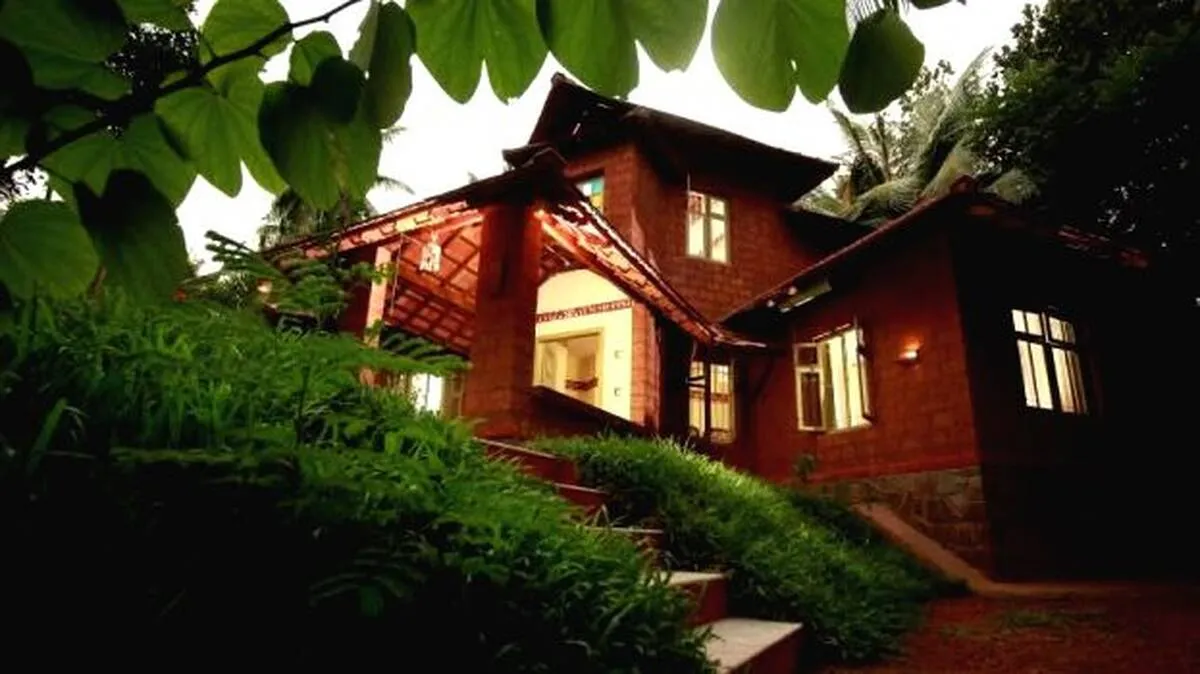
In Kozhikode, a home called Meda offers a practical example of how everyday choices can help reduce a household’s carbon footprint. Built by Babu Parambath, a resident of Vengeri, the house is described as India’s first carbon-neutral home. It has gone a step further, reportedly removing more carbon than it emits.
The United Nations has called for the world to achieve carbon neutrality by 2030. Babu has put that ambition into practice at home, turning his dream house into an example of sustainable living. Scientists from the Centre for Water Resources Management conducted a study of the house, which found that Meda had moved beyond carbon neutrality into net-negative territory.
Construction of the tiled-roof house began in 2009 on a 12-cent plot. Babu planted as many trees and other plants as possible to absorb carbon and installed solar panels to meet the household’s electricity needs. The surplus electricity is supplied to the grid, earning him around Rs 8,000 a year.
Composting fallen leaves and using the resulting compost for cultivation bring in an additional annual income of about Rs 1 lakh, according to the report. At 63, Babu is also involved in the government’s carbon-neutral projects. He previously worked as an electrical supervisor in Riyadh and is the founder of the environmental organisation Niravu. His wife, Valsala, is a retired teacher, while their son, Hrithwik Parambath, is an architect.
At Meda, daylight takes the place of electric lighting for much of the day. Babu keeps the windows and doors open to let natural light into the house, avoiding the need to switch on lights during daylight hours.
The family grows its own vegetables, with onions and potatoes among the exceptions. A biogas plant provides another way to manage waste: food scraps from neighbouring households are also used to produce biogas. Composting helps prevent vegetable waste and other organic matter from decomposing without being put to productive use, reducing the associated carbon emissions. The household uses electric vehicles and does not burn plastic or other waste.
The home’s reported carbon figures illustrate the impact of these practices:
The figures show a net reduction of 1.93 tonnes after accounting for the reported emissions and reductions.
Babu hopes to extend the approach to more homes across Kerala, with the broader aim of making the state carbon-neutral.
“The effort is to make Kerala carbon-neutral by extending this to more homes,” Babu Parambath says.















 HOME
 LATEST
 NOTIFIED NEWS
 POLL
 KERALA
 EDITORIAL
 INDIA
 WORLD
 BUSINESS
 CINEMA
 SPORTS
 LIFESTYLE
 SPECIAL
 SCIENCE & TECHNOLOGY

 |