


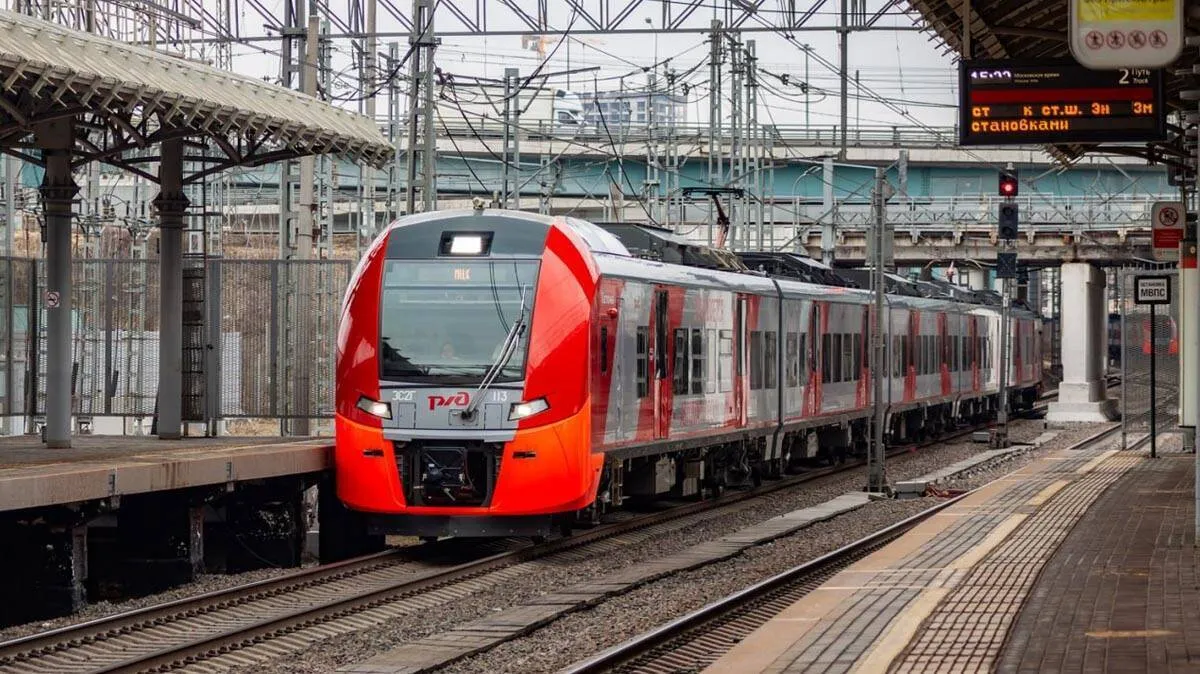
MOSCOW: A freight train service from the Russian capital Moscow to India could soon become a reality. The proposed train will run through a corridor stretching across Eurasia. Russian Deputy Prime Minister Marat Shakirzyanovich Khusnullin argued that such a route could reduce dependence on strategic routes such as the Bosphorus in Turkey and the Strait of Hormuz. The comments came amid discussions of geopolitical tensions in the Black Sea and the Middle East, as well as the risks associated with traditional shipping routes.
The new rail network would start in Moscow and pass through four countries to reach India. If the project becomes a reality, it would bring huge economic benefits to landlocked Afghanistan and Turkmenistan. Although it is an economically viable project, it will have to overcome many political hurdles. This discussion is closely related to the 'International North-South Transport Corridor' project, which involves India, Iran, and Russia and was first agreed upon in 2000.
Reports say that this corridor will reduce transportation time and cost compared to the traditional Mumbai-Suez-Europe-Russia route. However, the Russia-India rail corridor requires stable cooperation between multiple countries, including Iran and Azerbaijan. In addition, these projects are not free of technical hurdles. Russia and the former Soviet Union use broad gauge rail systems. But Iran uses standard gauge. Therefore, gauge conversion arrangements are a prerequisite.
In addition, Pakistan also poses a challenge. A direct rail line through Pakistan to India in the current political climate seems unfeasible. There are border disputes and security concerns between Taliban-ruled Afghanistan and Pakistan. Another major challenge is the need to invest billions of dollars in building advanced railway tracks in Afghanistan and Pakistan. Meanwhile, neither India nor Pakistan have officially responded to the Russian proposal yet.
Route: Russia - Kazakhstan - Turkmenistan - Iran - Afghanistan - Pakistan - India













 HOME
HOME LATEST
 NOTIFIED NEWS
 POLL
POLL KERALA
  EDITORIAL
  INDIA
INDIA  WORLD
WORLD  BUSINESS
  CINEMA
  SPORTS
  LIFESTYLE
  SPECIAL
  SCIENCE & TECHNOLOGY
 |
|