


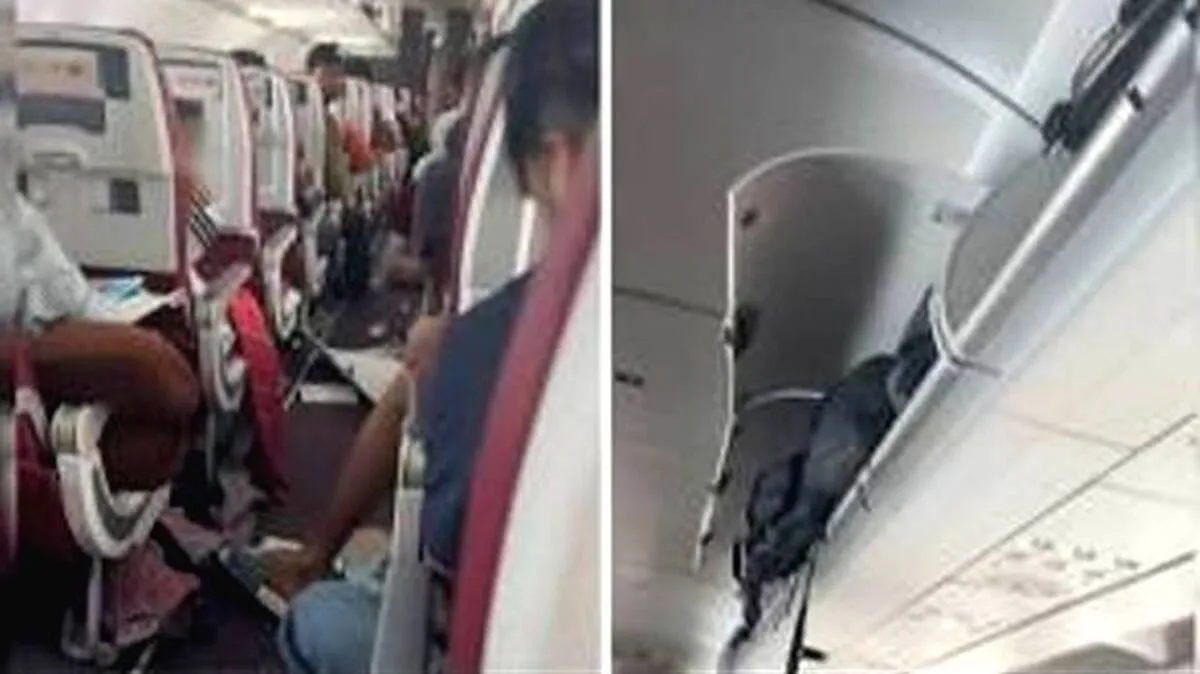
NEW DELHI: Air India has terminated the pilot-in-command of its Phuket-Delhi flight after a post-flight test found a psychoactive substance in his sample. The airline announced the decision on Friday, hours after the Aircraft Accident Investigation Bureau (AAIB) released its preliminary report into the August 4 incident involving flight AI2379.
The pilot-in-command tested non-negative for a psychoactive substance in both the initial test and a subsequent confirmatory test, the AAIB report said. The co-pilot tested negative. Air India said it had a zero-tolerance policy towards violations involving safety, fitness for duty and regulatory requirements. The pilot's employment was terminated with immediate effect.
The substance finding, however, has not been linked to the technical failure that caused the aircraft's sudden altitude upset. The AAIB said its investigation into the cause of the hydraulic failure and other aspects of the incident is continuing.
The Airbus A320neo was cruising at 36,000 feet when all three of its hydraulic systems — green, blue and yellow — lost pressure within seconds of one another. The autopilot disconnected and a stall warning was briefly triggered.
The aircraft then experienced a sudden change in altitude. It gained about 372 feet before losing about 292 feet from its assigned altitude. The hydraulic systems recovered within seconds and the aircraft continued its flight to Delhi. The co-pilot was flying the aircraft when the incident began and initially responded to the situation. The pilot-in-command later took control.
There were 145 people on board, including 137 passengers, six cabin crew and two pilots. The sudden movement injured 20 passengers and four cabin crew members. The aircraft later landed safely in Delhi.
The AAIB has recommended that the Directorate General of Civil Aviation (DGCA) take appropriate action to prevent the misuse of psychoactive substances by aviation personnel. It described the confirmation of psychoactive-substance use as a serious concern.
The investigation into the aircraft's technical failure is still underway. Investigators are examining the hydraulic systems and other evidence to determine what caused the near-simultaneous loss of hydraulic pressure.















 HOME
HOME LATEST
 NOTIFIED NEWS
 POLL
POLL KERALA
  EDITORIAL
  INDIA
INDIA  WORLD
WORLD  BUSINESS
  CINEMA
  SPORTS
  LIFESTYLE
  SPECIAL
  SCIENCE & TECHNOLOGY
 |
|