


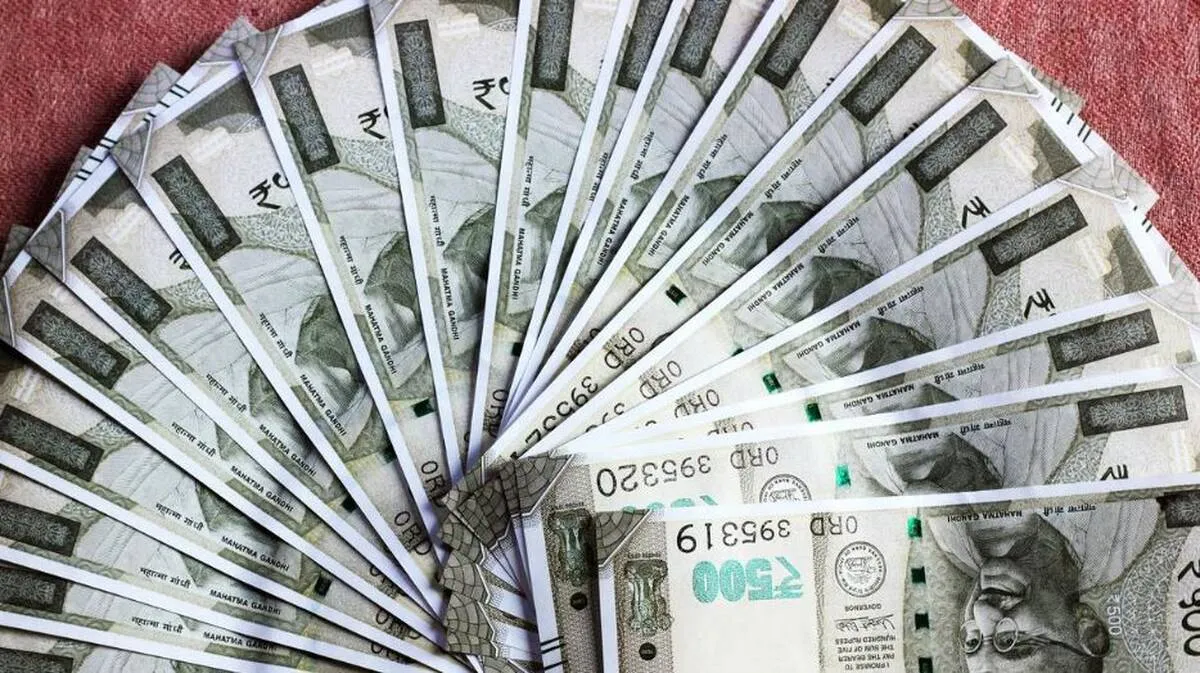
A few days ago, while looking at India’s 7.8% growth in the April–June quarter, I wrote about an apparent contradiction. If the economy is growing so strongly, why is the Prime Minister asking Indians to travel within the country, avoid holding weddings abroad and think twice before buying more gold? My argument then was that growth happens largely in rupees, while many of the things a growing economy needs from the rest of the world have to be paid for in foreign currency. Strong GDP growth and the need to be careful with foreign exchange are therefore not contradictory.
There is, however, another part of that story, and the latest numbers make it worth examining. India is not facing a shortage of dollars. Foreign-exchange reserves have crossed about $741 billion, a level that would have been almost unimaginable to an Indian who remembers the external payments crisis of 1991. Some of this accumulation also reflects FCNR and swap-related inflows, not export earnings alone. Nor does the current account suggest an economy presently living dangerously beyond its means. During April–June, India’s merchandise trade deficit was about $86 billion, but after services, remittances and other cross-border receipts and payments were taken into account, the current-account deficit was only around $4.2 billion, or 0.5% of GDP.
The distance between those two numbers tells us something important about modern India. We still import substantially more goods than we export, but merchandise is only one part of our economic relationship with the world. An engineer in Bengaluru working for an American client earns foreign exchange without a container leaving an Indian port. So does an accounting firm providing services overseas, a hospital treating a foreign patient, a hotel accommodating an international tourist or a technology company maintaining software for customers across continents. India has become remarkably good at selling services to the world, and those earnings partly compensate for what we spend importing physical goods.
For a Kerala reader, there is another part of this story that requires hardly any explanation. Money sent home by Indians working in the Gulf, Europe, America and elsewhere may appear to the receiving family simply as money for household expenses, education, a home or savings. At the level of the national economy, however, millions of such transfers become a powerful source of foreign exchange. Services and remittances are among the reasons why a very large merchandise trade deficit does not automatically translate into an equally large current-account deficit.
That distinction is important because otherwise we can easily arrive at the wrong conclusion that imports themselves are undesirable. They are not. A developing economy is expected to import, and a rapidly growing economy will often import more. The question is what those imports do for the economy afterwards. If an Indian company spends one million dollars importing a sophisticated machine that enables it to manufacture products worth several million dollars over the following years, employ people, replace other imports and perhaps eventually export its output, the million dollars that left the country cannot sensibly be described as a loss. The foreign exchange went out, but productive capacity came in.
The same reasoning applies to technology, industrial components, energy and much of the equipment required for India’s development. Trying to manufacture everything domestically merely because it saves foreign exchange would take us back towards an economic philosophy India has already discovered the limitations of. If an imported component allows an Indian manufacturer to produce a globally competitive product, that import can be part of India’s economic strength rather than evidence of weakness. The relevant question is therefore not simply how many dollars India spends, but what economic value is created because those dollars were spent.
This is also why the debate about foreign holidays deserves some perspective. As Indians become wealthier, they will travel more. Their children will study abroad, their companies will invest overseas, and their families will increasingly consume goods and experiences from around the world. These are not necessarily symptoms of economic indiscipline; to some extent they are precisely what rising prosperity looks like. An economy cannot aspire to make its citizens wealthier and then regard every additional foreign holiday as a national economic problem. If India’s long-term answer to its external account were that citizens must permanently suppress lawful consumption, something would have gone wrong with the economic model itself.
Gold is more complicated. It is tempting to contrast a machine installed in a factory with a necklace lying in a locker and conclude that one is productive while the other is wasteful. There is some truth in that distinction, but it does not explain why Indian households continue to hold such a deep attachment to gold. For generations, gold has served not merely as jewellery but as savings, security and readily pledgeable wealth. A family buying gold may therefore think it is saving rather than consuming. The more interesting economic question is why so much Indian household saving still finds its way into an asset that the country largely has to import.
Seen from that angle, the problem is no longer simply that Indians buy too much gold. It is also whether our financial system has given households sufficiently trusted and understandable alternatives into which their savings can move. Money invested through deposits, pension funds, mutual funds, bonds or equity can eventually finance businesses, infrastructure and investment. Gold sitting in a household locker has a much weaker connection with productive capital formation. If India wants households to gradually reduce their incremental demand for imported gold, attractive financial alternatives are likely to achieve more over time than appeals to patriotism.
There is a similar complication on the other side of the ledger. We rightly celebrate when India’s exports rise, but even the headline export number does not tell us everything we need to know. Suppose an electronic product exported from India is worth $1,000. If $700 worth of imported components went into producing it, the economic contribution made within India is quite different from another $1,000 product for which most of the components, engineering, design and intellectual property were created here. Both shipments enter the trade statistics as exports of $1,000, but they do not represent the same depth of Indian productive capability.
That, in my view, is where the discussion about dollars should ultimately lead. India certainly needs to export more, but over time it also needs to increase the Indian value contained in what it exports. The objective should not be crude self-sufficiency or the elimination of imports. Modern manufacturing works through international supply chains, and some of the world’s most successful exporting economies are also enormous importers. The real achievement comes when imported inputs are combined with domestic labour, technology, design, capital and enterprise to create substantially greater value that can then be sold both at home and abroad.
This makes India’s present position rather more interesting than a simple warning about a widening trade deficit would suggest. The country has accumulated about $741 billion of foreign-exchange reserves, has a formidable services-export sector and receives substantial remittances from Indians overseas. At the same time, a growing economy will require more energy, electronics, machinery, technology and capital equipment from abroad, while increasingly prosperous households will naturally want to spend more outside India. The pressure on foreign exchange will therefore not disappear merely because today’s reserves are comfortable.
Nor should the ambition be to make that pressure disappear by asking Indians to consume less. The durable answer is to ensure that India’s capacity to earn foreign exchange expands alongside its capacity to spend it. That means making Indian manufacturing more competitive, improving logistics, reducing unnecessary energy dependence, developing technological capability, deepening financial markets and continuing to expand the sophisticated services that India already sells successfully to the world. It also means paying greater attention to domestic value addition rather than becoming satisfied merely because a product carrying a Made in India label has crossed the border as an export.
The comparison with 1991 is useful only up to a point. India then had to worry about whether it had enough foreign exchange to meet essential payments. India in 2026, with reserves above $740 billion, is asking a different question. A much larger economy will inevitably have a much larger relationship with the world. Indians will buy more from abroad, travel more, invest more overseas and participate more deeply in global commerce. Trying to prevent that would amount to resisting the very prosperity we are trying to create.
The more meaningful measure of success will therefore be whether India’s ability to create value for the world grows at least as quickly as its appetite to consume value created elsewhere. That cannot be achieved through slogans about imports, nor through permanent appeals to households to conserve dollars. It comes from productivity, competitiveness, technology, skills and enterprise.
So perhaps the discussion that began with whether Indians should holiday abroad or buy another piece of gold needs to end somewhere quite different. Those choices matter at the margin, particularly when external conditions become difficult, but they cannot carry the burden of India’s economic strategy. The larger challenge is to build an economy in which an Indian buying something from the world is increasingly matched by someone, somewhere in the world wanting to buy something India has created.
India may occasionally need to be careful with its dollars. But it cannot conserve its way to prosperity. It has to produce, compete and earn its way there.
(Views are Personal)














 HOME
HOME LATEST
 NOTIFIED NEWS
 POLL
POLL KERALA
  EDITORIAL
  INDIA
INDIA  WORLD
WORLD  BUSINESS
  CINEMA
  SPORTS
  LIFESTYLE
  SPECIAL
  SCIENCE & TECHNOLOGY
 |
|