


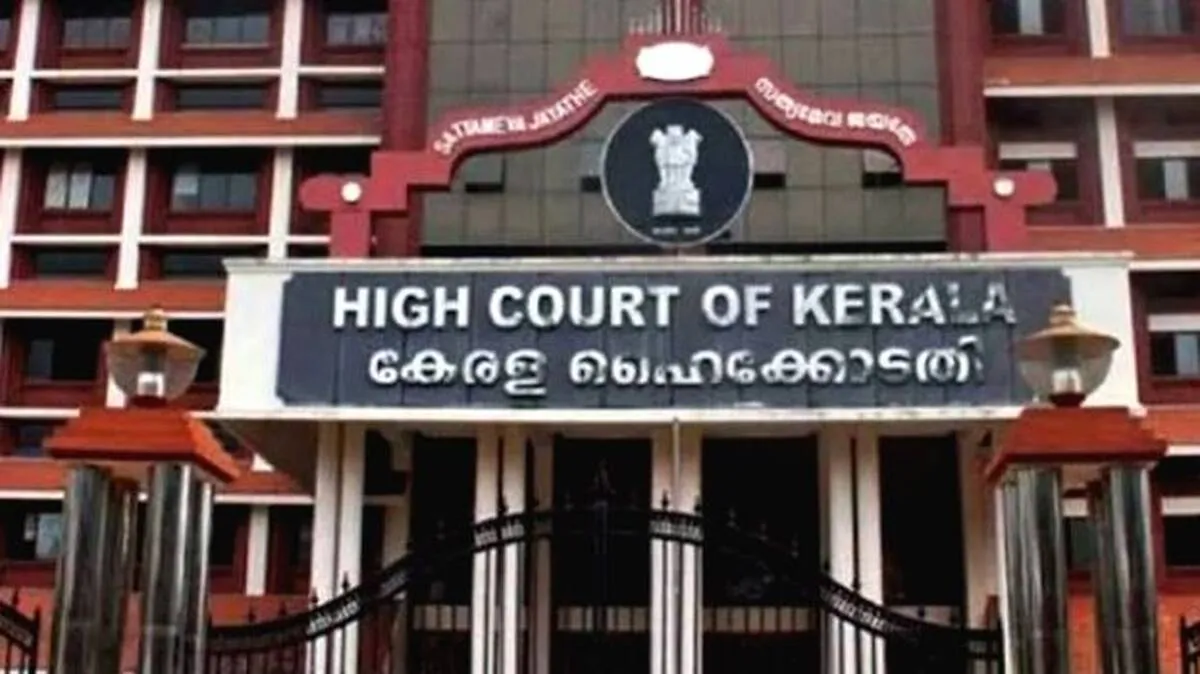
KOCHI: The Kerala High Court will examine whether an FIR must be registered against former Kerala chief minister Pinarayi Vijayan and others based on a report submitted by the Enforcement Directorate (ED) to the state police chief in the monthly payment case. The issue has arisen after the ED maintained that the report submitted to the Director General of Police under Section 66(2) of the Prevention of Money Laundering Act (PMLA) required the police to register an FIR. The state government, however, argued that the authorities have the discretion to decide whether an FIR should be registered.
Justice A. Badharudeen directed the ED to produce a copy of the report submitted to the DGP in a sealed cover. The court will hear detailed arguments on the issue on September 29.
The court was hearing a petition filed by advocate K.M. Shajahan challenging the failure to register a case under the Prevention of Corruption Act against Pinarayi Vijayan, his daughter T. Veena, and his son-in-law and former minister P.A. Mohammed Riyas in connection with the allegations raised in the ED report.
The petitioner's counsel alleged that the failure to register an FIR amounted to collusion. The court asked whether the petitioner had seen the ED report and observed that the matter was serious enough to warrant detailed examination of the legal issue.
Appearing for the ED, advocate Jayashankar V. Nair submitted that its investigation, conducted on the basis of the Serious Fraud Investigation Office (SFIO) report, had found facts warranting registration of a case under the Prevention of Corruption Act.
The ED's counsel said the agency had written to the police in 2025 and had sent another communication recently. He argued that the police were obliged to register an FIR on the basis of the information provided by the ED and that the Supreme Court had made this clear in similar cases.
The court, however, orally asked whether the Supreme Court had held that an FIR should be registered when there is sufficient evidence, indicating that the applicability of the Supreme Court rulings would also have to be examined.
Appearing for the state, Advocate General Jaju Babu argued that the petition was not maintainable. He submitted that the matter should have been raised through a public interest litigation, or that the ED itself should have approached the court.
The Advocate General also pointed out that, according to the ED report, the decision to conduct a preliminary inquiry had been taken on the basis of legal advice.















 HOME
HOME LATEST
 NOTIFIED NEWS
 POLL
POLL KERALA
  EDITORIAL
  INDIA
INDIA  WORLD
WORLD  BUSINESS
  CINEMA
  SPORTS
  LIFESTYLE
  SPECIAL
  SCIENCE & TECHNOLOGY
 |
|