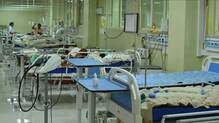



The Department of Cardiology in association with the Department of Transfusion Medicine at Sree Chitra Tirunal Institute for Medical Sciences and Technology (SCTIMST), An Institute of National Importance, Department of Science & Technology, Government of India, has successfully performed its First LDL (Bad Cholesterol) apheresis procedure on a 34-year-old lady suffering from Homozygous Familial Hypercholesterolemia (HoFH), a rare genetic condition causing extremely high cholesterol levels from a young age. The team consisted of Dr Harikrishnan S, Professor (Senior Grade) and Dr Manish Yadav from the Department of Cardiology and Dr Amita R, Additional Professor from the Department of Transfusion Medicine.
The patient had severe premature coronary artery disease (blocks in heart blood vessels) and had previously undergone coronary artery bypass surgery (CABG) at a very young age of 24 years. Despite receiving the maximum tolerable dose of multiple cholesterol-lowering medications, her Low-Density Lipoprotein LDL, “bad” cholesterol levels, remained dangerously high (500 mg) with only limited benefit even from a combination of multiple medicines.
In this procedure, blood is drawn from the patient and passed through an apheresis machine, which separates plasma from the blood cells. The plasma is then directed through a special adsorption column that traps LDL cholesterol. The treated plasma is recombined with the blood cells and safely returned to the patient. The entire process takes about two to three hours, and the LDL value came down to 40mg from 500mg. This procedure can be performed on an outpatient basis, but this cholesterol level rises faster again, so usually the procedure needs to be repeated every 2–4 weeks to maintain cholesterol control and reduce future cardiac risk.
This breakthrough marks a major step forward in the management of inherited cholesterol disorders in Kerala and South India. SCTIMST now joins a select group of centres in India offering this advanced therapy.












 HOME
HOME LATEST
 NOTIFIED NEWS
 POLL
POLL KERALA
  EDITORIAL
  INDIA
INDIA  WORLD
WORLD  CINEMA
  SPORTS
  LIFESTYLE
  SPECIAL
  SCIENCE & TECHNOLOGY
 |
|