

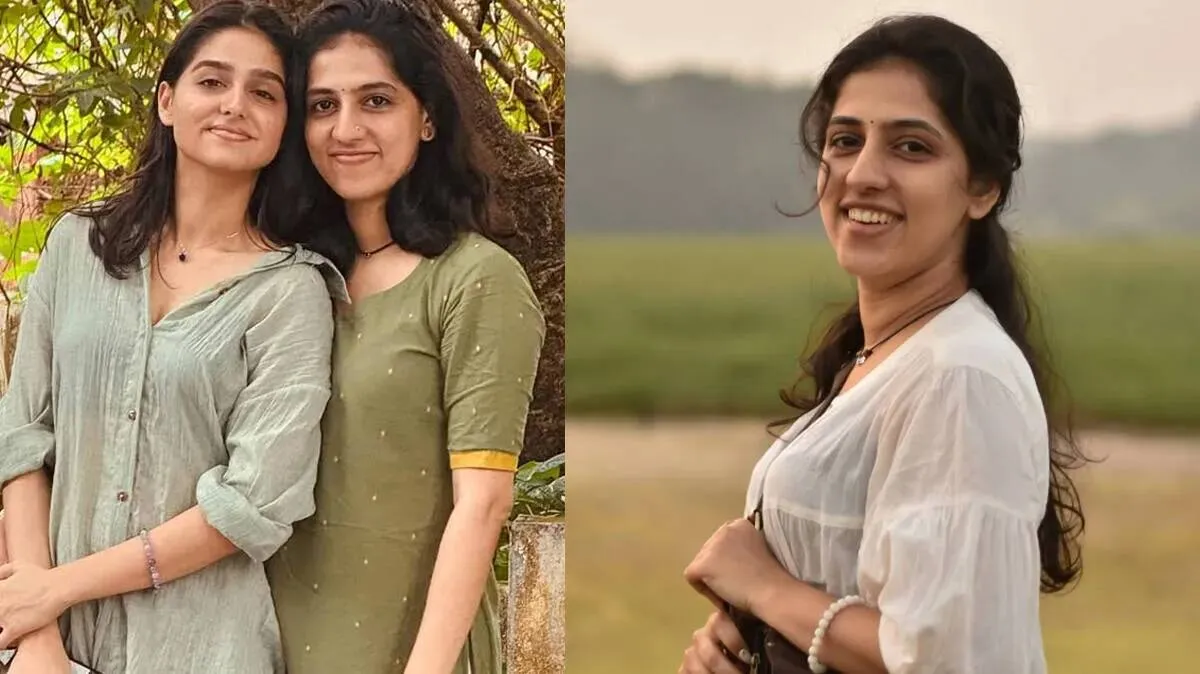
Social media influencer Aishwarya Rajan, sister of actress Anaswara Rajan, has opened up about the chronic health issues she has been battling since the age of 16.
Known for sharing aesthetically shot moments from her life with music, Aishwarya recently began posting videos in her own voice. In her latest video, she candidly spoke about the physical and emotional challenges of living with conditions including disc degeneration, allergies, fibromyalgia and inflammation.
She revealed that because of her spinal condition, she was unable to sit for long periods and often had to attend college classes standing. There were times when the back pain was so severe that she couldn't even bend down to wash her face. Aishwarya said she tried several forms of treatment, including Ayurveda and allopathy, in search of relief, adding that the behaviour of some doctors left her with lasting trauma.
‘I underwent appendicitis surgery when I was 16, and it was a complicated one. I had to remain on bed rest for several months. Later, while I was in the fifth semester of my degree course, I found that I couldn't sit and write anymore. I couldn't bend or even lean forward. After undergoing scans and an MRI, I discovered that I had disc degeneration,’ she said.
Aishwarya also spoke about the difficult phases of her treatment and the emotional toll of living with chronic pain. She recalled that she was once known as the girl with back pain, saying it wasn't something anyone would want to be identified by. Despite failed treatments and traumatic experiences, she explained how she gradually learned to accept pain as a part of her life.
‘Many commented on the way I was running after watching a video of Anu and me. It hurt me a little, but this is why. I can't run properly without pain. Even now, I have pain in my gluteal muscles. Nothing is easy for me. After living through this long journey of pain, I've reached a point where I've learned to live with it,’ she said.
Aishwarya clarified that she was not sharing her story to seek sympathy or empathy, but to explain why she has sought treatment and to help people understand the reality of her condition.














 HOME
HOME LATEST
 NOTIFIED NEWS
 POLL
POLL KERALA
  EDITORIAL
  INDIA
INDIA  WORLD
WORLD  CINEMA
  SPORTS
  LIFESTYLE
  SPECIAL
  SCIENCE & TECHNOLOGY
 |
|