

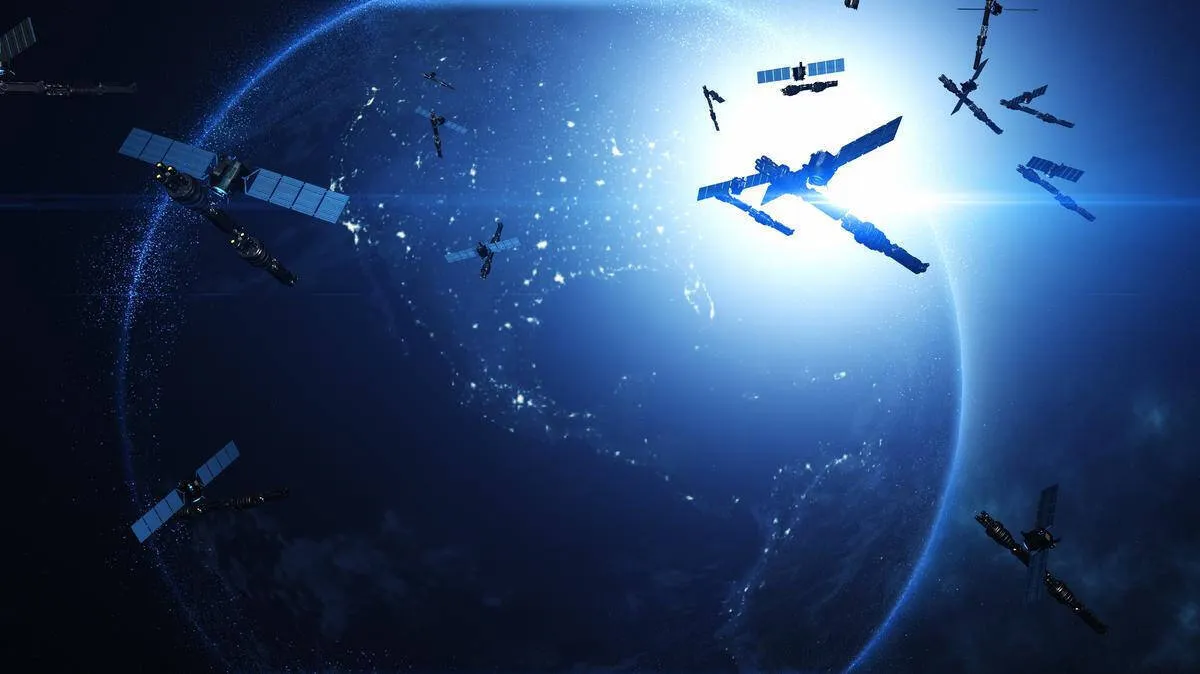
WASHINGTON: NASA's space telescope, Neil Gehrels Swift Observatory, is expected to re-enter Earth's atmosphere soon. The 1.5-tonne telescope is gradually descending towards Earth, raising concerns about where its debris could land.
Parts of Africa, Australia, India, Southeast Asia, and Central and South America are among the regions that could fall within the possible impact zone, said Brad Cenko, the mission's principal investigator.
According to the US space agency, the telescope is expected to enter Earth's atmosphere at around 2 pm IST on November 4. However, there is an uncertainty window of around 11 hours regarding its re-entry. Although most of the telescope is expected to burn up in the atmosphere, some components could survive and reach the Earth's surface.
India is also within the potential impact zone. The region includes areas south of an imaginary line stretching from Daman on the western coast to Cuttack in Odisha on the eastern coast. Major cities such as Mumbai, Hyderabad, Bengaluru and Chennai fall within this zone. Delhi, Kolkata and most parts of northern India are outside it. However, some experts believe that the telescope is more likely to fall into the ocean.
NASA launched the telescope on November 20, 2004. Initially known as the Swift Gamma-Ray Burst Explorer, it was designed for a mission lasting just two years. However, it continued to operate in space for nearly 22 years, exceeding expectations and making significant contributions to astronomy. During its mission, the telescope observed more than 2,000 gamma-ray bursts and over 1,400 supernovae. It is now heading towards Earth after NASA's final efforts to keep it in orbit failed.
The Indian Space Research Organisation (ISRO) has a Multi-Object Tracking Radar facility at Sriharikota to monitor objects re-entering Earth's atmosphere. However, there is no official confirmation on whether ISRO is currently tracking NASA's telescope.















 HOME
 LATEST
 NOTIFIED NEWS
 POLL
 KERALA
 EDITORIAL
 INDIA
 WORLD
 BUSINESS
 CINEMA
 SPORTS
 LIFESTYLE
 SPECIAL
 SCIENCE & TECHNOLOGY

 |