

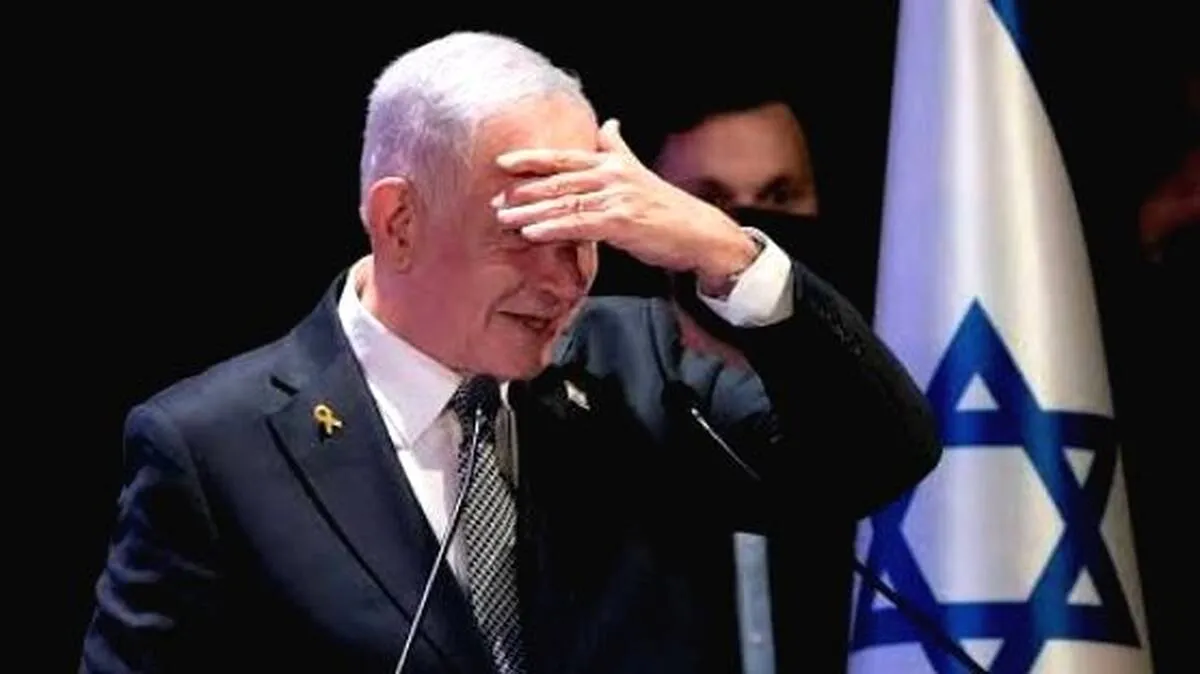
Arab parties will have the final say in the government formation in Israel. It is expected that the coalition led by Prime Minister Benjamin Netanyahu will secure 53 seats, while the opposition alliance led by his main rival, Gadi Eisenkot, will obtain 48 seats. The support of Arab parties is essential to achieving a majority in parliament.
A majority in the 120-seat Israeli parliament requires 61 seats. The prospect of the two major Arab political forces—Ra'am and the Joint List—securing a combined total of 19 seats (driven by high voter turnout among the Arab population, which makes up 20% of the total) enhances their significance in the formation of a government.
However, Jewish political parties are generally reluctant to form a government in alliance with Arab parties. This stems from concerns regarding Israel’s Jewish character, the stances held by Arab leaders on the Palestinian issue, and doubts about whether they can be trusted on matters of national security. Such concerns have intensified following the Hamas attack on October 7, 2023.
The opposition may require the support of Arab parties to remove Netanyahu from power. However, Eisenkot’s stance regarding the formation of an alliance with them is crucial. It would be difficult for the opposition to secure a majority without Arab support. To prevent this, Netanyahu has already levelled sharp criticism at the Arab parties. For their part, the Arab parties have signalled that they would support the opposition in ousting Netanyahu.
A crucial question is whether Arab parties will join the government coalition directly or provide support from the outside. Their stance could influence the formation of the new government as well as its policies. Key questions in Israeli politics include who will be brought to power by Arab support and how that support might shape the new government's policies.
(The author is a Professor of Political Science at the University of Kerala and the Director of the Karyavattom Campus.)














 HOME
 LATEST
 NOTIFIED NEWS
 POLL
 KERALA
 EDITORIAL
 INDIA
 WORLD
 BUSINESS
 CINEMA
 SPORTS
 LIFESTYLE
 SPECIAL
 SCIENCE & TECHNOLOGY

 |