

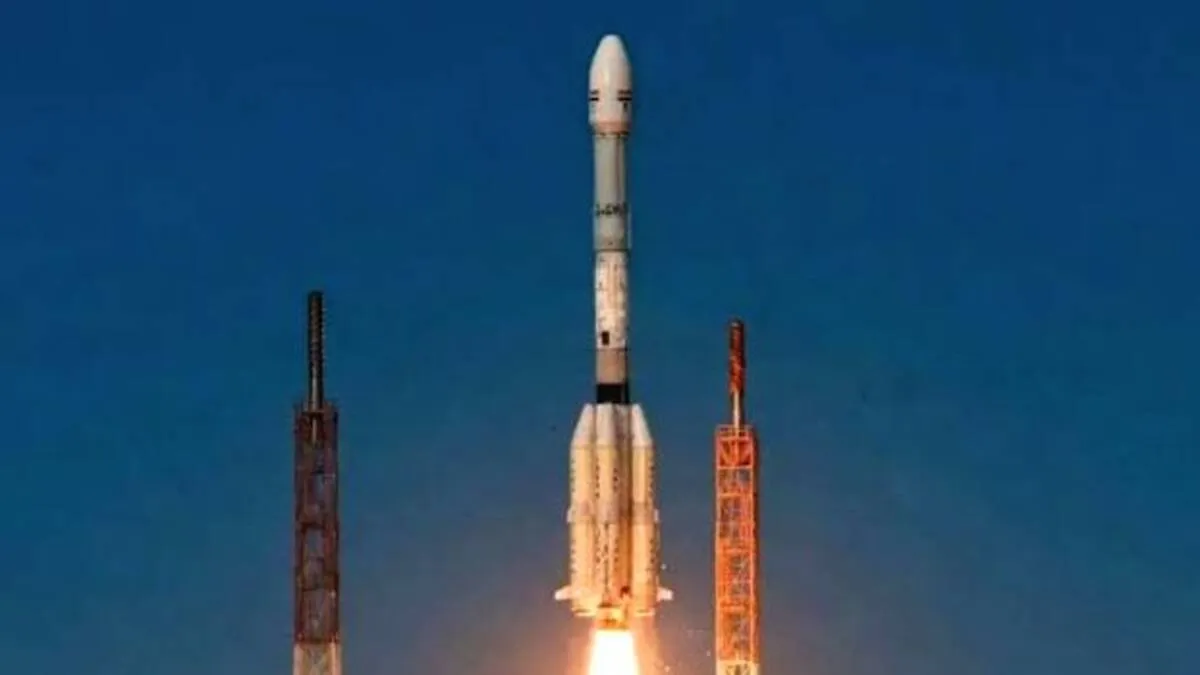
THIRUVANANTHAPURAM: For the first time, the central government denied permission for a satellite launch planned by the Indian Space Research Organisation. The satellites are NVS-03 and EOS-05. They are for navigation and defence purposes.
It is rumoured that the permission was denied taking into account the PSLV rocket launch that failed twice in a row. However, the centre suspects sabotage behind the failure of the launch of a very important satellite for defence purposes last January. An investigation is also underway. Satellites are launched on the GSLV rocket rather than the PSLV. The exact reason for denying the permission will be known only when the report surfaces.
ISRO found that the PSLV failures were a technical fault. However, the centre's action was contrary to the norm. National Security Advisor Ajit Doval personally visited the VSSC centre in Thumba and sought information. Later, a special team appointed by the central government began an investigation.
ISRO initially decided to launch the satellites in June and July. However, no further announcements followed. The news regarding the denial of permission only surfaced yesterday. Even if permission is allowed now, there will be a delay in getting a new launch window.
The PSLV missions failed on May 18 last year and January 12 this year.
NVS - 03 is for the indigenous navigation system NAVIC. Out of the total seven satellites for this, three are currently operational
Four of them were inoperative due to a technical problem with the atomic clock. NVS - 03 is a second-generation satellite that was prepared to solve that
GSLV Mark 2 rocket was prepared for the launch, instead of PSLV. The rocket in Sriharikota is ready and parked in the launch position
GSAT-1A is a defence surveillance satellite. GSAT-1A, a replacement for the failed GSAT-1 in 2021, failed during its launch in January
The manufacturer was DRDO. Later, it was renamed EOS-05 and re-developed with more technical improvements
It will also be useful for precise earth observation and disaster management. It is to be launched on the GSLV-Mark 3 rocket













 HOME
HOME LATEST
 NOTIFIED NEWS
 POLL
POLL KERALA
  EDITORIAL
  INDIA
INDIA  WORLD
WORLD  CINEMA
  SPORTS
  LIFESTYLE
  SPECIAL
  SCIENCE & TECHNOLOGY
 |
|