


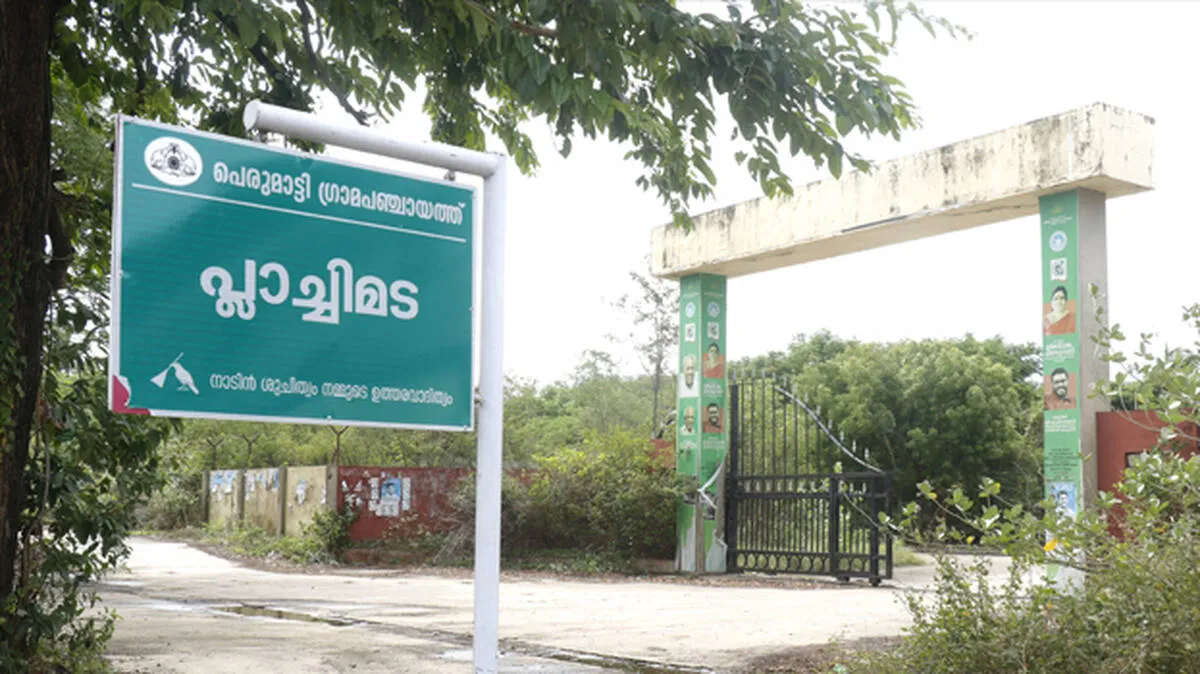
PALAKKAD: The defunct Hindustan Coca-Cola Beverages plant in Plachimada, which was forced to shut down following a historic public uprising against groundwater exploitation, has emerged as a favoured location for filmmakers. The site has generated approximately Rs 54 lakh in revenue for the state government solely from movie shoots over the past year.
Following the growing interest from production houses, the Revenue Department has submitted a report to the government, recommending that the site be developed into a premier film shooting destination by equipping it with better facilities. The department had previously reclaimed 34 acres of land through a prolonged legal battle after the company ceased operations and vacated the premises in 2004. Currently, the land is being leased out for movie shoots at a daily rate of Rs 75 per cent of land. The film sets are primarily erected within the old plant building, which spans about one acre, and its surrounding areas.
Four movies have been shot at the location within the last year. The first film to utilise the premises was Aadu 3, directed by Midhun Manuel Thomas. Other upcoming projects filmed here include Vala, which marks the return of veteran actor Jagathy Sreekumar, and another movie featuring debutant actors. Moolathara Village Officer K. Devadasan stated that due to its location near the Kerala-Tamil Nadu border, filmmakers even from Tollywood regularly visit the site in search of suitable shooting backdrops.
The ongoing transformation comes years after a historic environmental struggle in the agricultural village of Plachimada, located near the interstate border. Hindustan Coca-Cola Beverages Private Limited had applied to the Perumatty Panchayat in 1999 to establish its factory, and the local body granted the license in 2000.
Environmental degradation and severe drinking water scarcity began plaguing the region soon after the plant commenced operations. Within six months, water levels in local wells and ponds depleted drastically, and chemical contamination in certain wells led to severe health issues among the local population. Additionally, agricultural fields were ruined after crops failed due to the application of chemical waste distributed by the company under the guise of fertiliser.
In response to the ecological damage, local residents launched an intensive anti-Coca-Cola agitation on Earth Day, April 22, 2002. The protest gained international attention during the World Water Conference organised in Plachimada in 2004. Facing unrelenting public resistance and legal challenges, the factory was permanently shut down later that year.















 HOME
HOME LATEST
 NOTIFIED NEWS
 POLL
POLL KERALA
  EDITORIAL
  INDIA
INDIA  WORLD
WORLD  CINEMA
  SPORTS
  LIFESTYLE
  SPECIAL
  SCIENCE & TECHNOLOGY
 |
|