

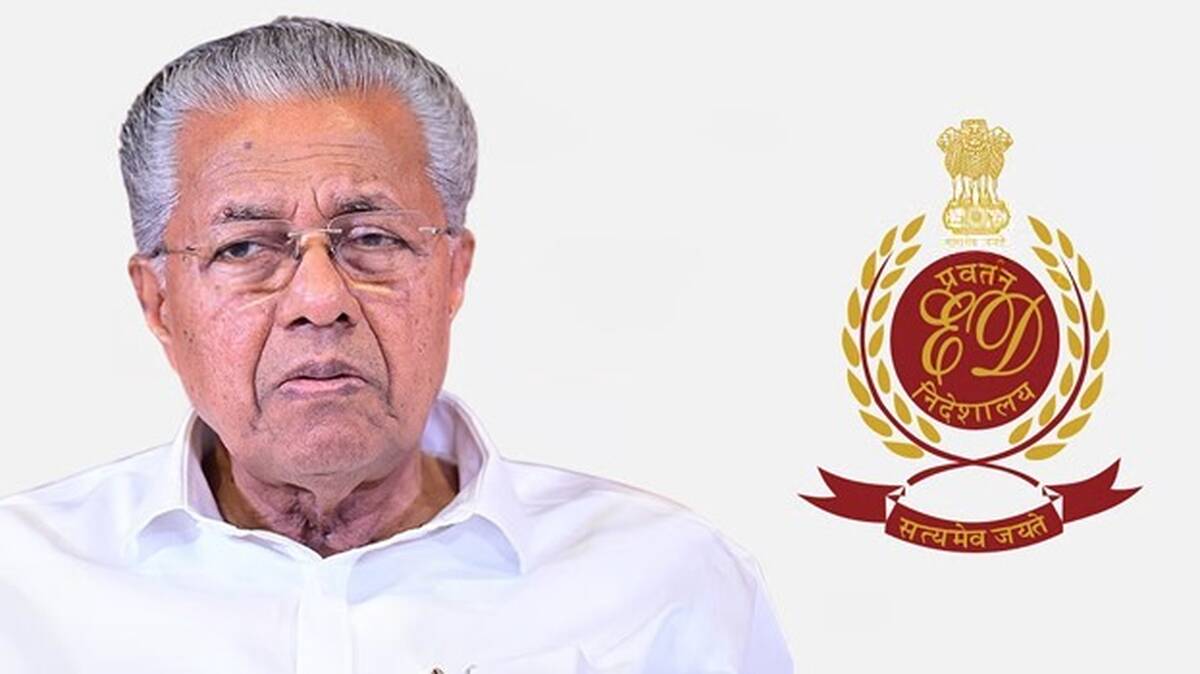
THIRUVANANTHAPURAM: The CPM is concerned that its political defence could falter as senior party leader Pinarayi Vijayan comes under the Enforcement Directorate’s (ED) questioning radar in connection with the CMRL-Exalogic transactions. Meanwhile, indications suggest that the CPM’s position is that Pinarayi Vijayan should not appear before the ED for questioning on Friday.
The party leadership had initially expected the ED to summon Mohammed Riyas for questioning and had prepared to counter the move politically. Until now, the investigation had not directly reached Pinarayi Vijayan. Even when the ED conducted searches, including at his residence, no questions were directed at him.
The Supreme Court’s position on the appeals filed by Pinarayi Vijayan and others against the ED’s action is crucial. However, the court was not willing to take up the appeals on an urgent basis. If the verdict goes against him, Pinarayi will have to appear for questioning, creating a major crisis for the CPM. Although the party leadership continues to assert that it will politically resist what it describes as a BJP-RSS witch-hunt using the ED as a weapon, there is no certainty about how effective this resistance will be. If the ED moves beyond questioning and proceeds with more stringent action, the party’s defence could falter. This is the first time that a CPM Politburo member is facing questioning in connection with transactions undertaken by family members. The fact that even the CPI, the second-largest party in the Left Democratic Front, is not supporting Pinarayi adds to the challenge.
The CPM leadership maintains that it had anticipated the ED’s move against Pinarayi. The seminars held in recent days with the participation of former Delhi Deputy Chief Minister Manish Sisodia, who was jailed in an ED case, and NewsClick editor Prabir Purkayastha were part of this effort. The leadership points out that it has maintained from the beginning of the case that the ED’s move was not aimed at Pinarayi’s daughter. The CPM is also attempting to shift responsibility for the ED’s action onto the Congress by campaigning that the state government had adopted a stance favourable to the ED.












 HOME
HOME LATEST
 NOTIFIED NEWS
 POLL
POLL KERALA
  EDITORIAL
  INDIA
INDIA  WORLD
WORLD  BUSINESS
  CINEMA
  SPORTS
  LIFESTYLE
  SPECIAL
  SCIENCE & TECHNOLOGY
 |
|