


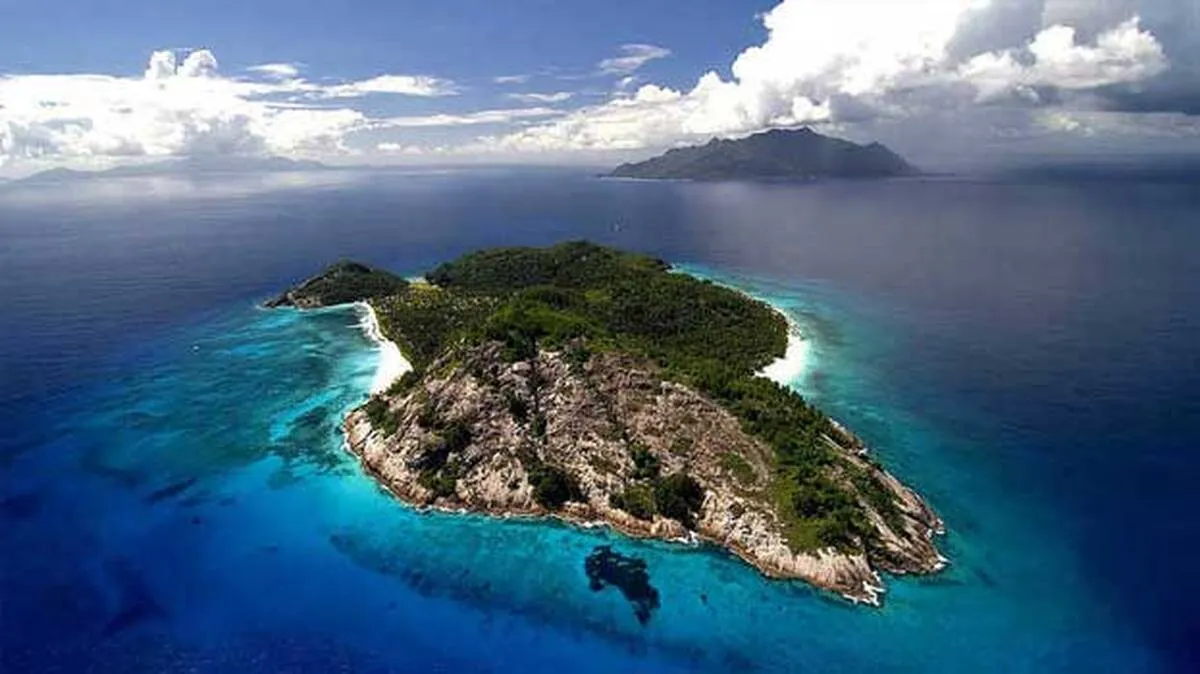
Deep in the Bay of Bengal, North Sentinel Island appears much like many other tropical islands—dense rainforest surrounded by clear water. What sets it apart is not its landscape, but the people who live there. The Sentinelese have spent generations resisting contact with the outside world, making the island one of the few places on Earth where an uncontacted Indigenous community continues to live on its own terms.
Researchers believe the ancestors of the Andamanese peoples reached the Andaman Islands around 60,000 years ago. Over thousands of years, different communities developed across the archipelago. The Sentinelese followed their own path, maintaining a hunter-gatherer way of life and avoiding sustained contact with outsiders. Sentinelese have adapted continuously to their environment. Their tools, hunting methods, and daily life reflect generations of knowledge suited to their island rather than a lack of development.
Their determination to remain isolated has been consistent. Boats approaching the shore are often met with arrows or spears, a warning that visitors are not welcome. In 2006, two fishermen who drifted into the island's waters were killed, underscoring the risks of entering Sentinelese territory without permission.
For several decades, Indian authorities and anthropologists attempted cautious contact with the tribe, leaving gifts such as coconuts or observing from a distance. These efforts rarely produced lasting engagement and were often met with hostility.
By the 1990s, the Indian government abandoned contact missions. One of the main reasons was the danger posed by infectious diseases. Even illnesses that are mild for most people today could have devastating consequences for an isolated population with little or no immunity.
Today, North Sentinel Island and the waters surrounding it are protected by law. Entry is prohibited, both to safeguard the Sentinelese from outside threats and to prevent potentially dangerous encounters with visitors. The restricted zone extends roughly five kilometres (about three nautical miles) from the island's shore.
The Sentinelese are not relics of the past. They are a contemporary Indigenous community that has chosen—or, more accurately, consistently defended—their independence from the outside world. Their survival depends on an intimate understanding of the island's forests, coastline, and marine resources, knowledge refined over countless generations.
Because there has been almost no direct contact, much about their language, culture, and social organisation remains unknown. What is known comes largely from distant observations rather than firsthand study.
North Sentinel Island therefore occupies a unique place in the modern world. In an age when few places remain beyond the reach of globalisation, it stands as a reminder that not every community seeks integration. For the Sentinelese, isolation is not a curiosity or a spectacle—it is simply the way they have chosen to live, and the choice that governments now seek to respect.














 HOME
HOME LATEST
 NOTIFIED NEWS
 POLL
POLL KERALA
  EDITORIAL
  INDIA
INDIA  WORLD
WORLD  CINEMA
  SPORTS
  LIFESTYLE
  SPECIAL
  SCIENCE & TECHNOLOGY
 |
|