


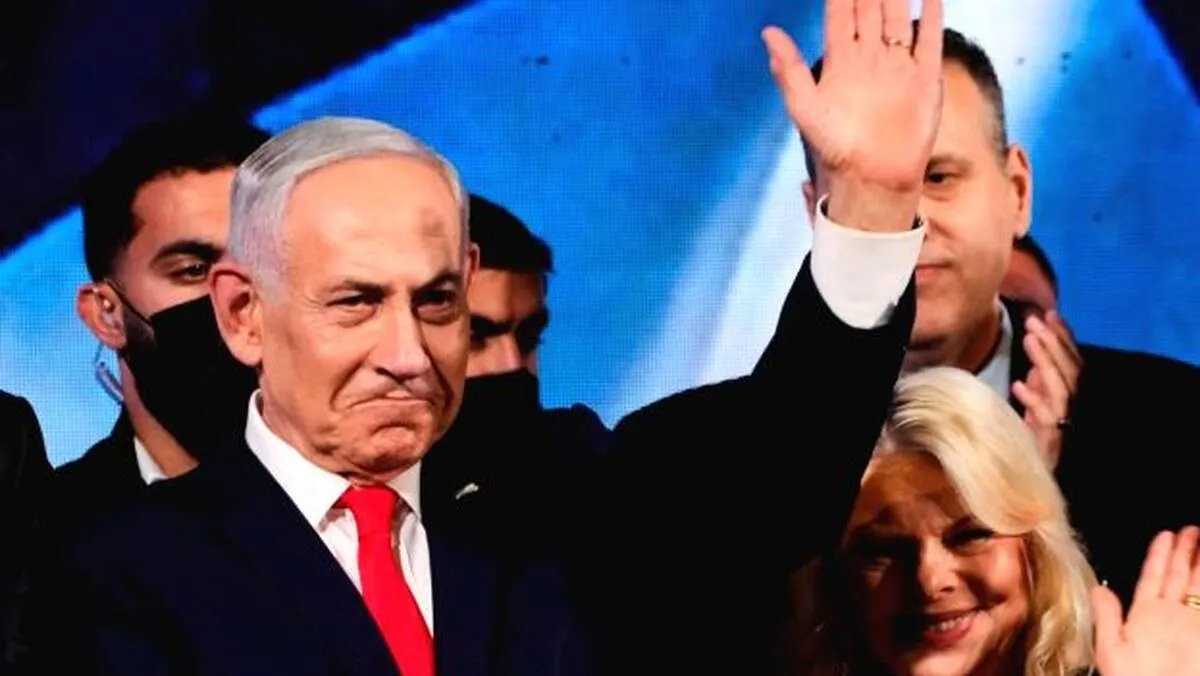
TEL AVIV: Israel is heading towards weeks of political uncertainty after the election results failed to give any alliance a clear majority. None of the competing groups has secured the 61 seats needed for a majority in the 120-member Knesset, Israel's Parliament.
Prime Minister Benjamin Netanyahu's far-right alliance is leading with 53 seats, while the Opposition alliance led by Gadi Eisenkot, head of the Yashar party and a former military chief, is close behind with 48 seats. Arab parties, which are not part of either alliance, have made an unexpected breakthrough, leading in 19 seats.
Netanyahu's Likud party has emerged as the single largest party with 26 seats, followed by Yashar with 21. According to the latest figures, 85.6 per cent of the votes have been counted.
Votes cast by soldiers, diplomats and others are yet to be counted. The counting process is expected to be completed by tomorrow. Although the final seat tally may change, neither alliance is likely to secure a majority on its own.
Meanwhile, Netanyahu and Eisenkot have both asserted that they will form the next government. The process could take weeks or even months. Until then, Netanyahu's caretaker government will continue in office.
1. The Election Committee will publish the final results on November 4 after verification. The President will then hold consultations with party leaders. The alliances can recommend their preferred candidate for Prime Minister.
2. The President will select the leader who has the best chance of securing majority support. The candidate need not necessarily belong to the party with the most seats. The selected leader will get a maximum of 42 days to form the government. If unsuccessful, the President will give another leader 28 days.
3. If that attempt also fails, a third leader will get an opportunity, with a deadline of 14 days. If no one succeeds, Parliament will be dissolved and fresh elections will be held within 90 days.
The possibility of the alliance with the highest number of seats forming the government cannot be ruled out. It will need the support of at least 61 members in a confidence vote in Parliament. Arab parties could help an alliance by voting in its favour or abstaining from the vote. However, Netanyahu has maintained that cooperating with Arab parties amounts to treason.
The Netanyahu camp is likely to try to win over right-wing members from the Opposition alliance. Although the Opposition may not form an alliance with Arab parties, it could seek their support to form the government. Arab parties may also cooperate with the Opposition to remove Netanyahu from power.
The initial exit polls had indicated a setback for Netanyahu. Eisenkot had even declared victory, saying that the people had rejected Netanyahu and calling on him to retire from politics.
However, the trend changed after vote counting began, with Netanyahu's alliance moving ahead. Netanyahu has declared that he will form a strong right-wing nationalist government.
He is also banking on possible divisions within the Opposition alliance, which comprises parties with ideological differences. This could make it difficult for them to remain united during government formation.














 HOME
 LATEST
 NOTIFIED NEWS
 POLL
 KERALA
 EDITORIAL
 INDIA
 WORLD
 BUSINESS
 CINEMA
 SPORTS
 LIFESTYLE
 SPECIAL
 SCIENCE & TECHNOLOGY

 |