


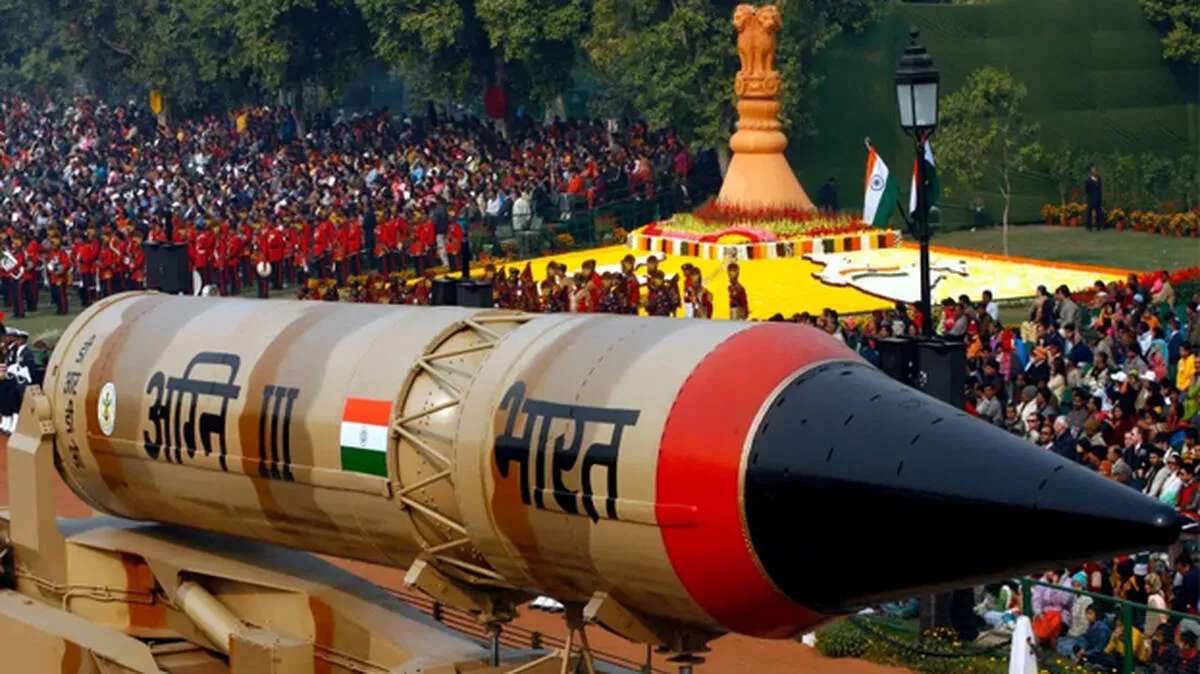
NEW DELHI: A new report by the Stockholm International Peace Research Institute (SIPRI) has revealed that India has further expanded its nuclear arsenal and now possesses significantly more nuclear warheads than Pakistan. According to the 'SIPRI Yearbook 2026', India's nuclear stockpile increased from 180 warheads in 2025 to 190 in 2026. The report states that India added 10 nuclear warheads to its arsenal over the past year.
With 190 warheads, India now has 20 more than neighbouring Pakistan, which is estimated to possess 170 warheads. SIPRI noted that Pakistan's nuclear capabilities have remained largely unchanged during the same period.
The report comes amid continuing tensions between India and Pakistan. SIPRI said India is developing weapons capable of reaching targets across China and has made progress in advanced technologies that allow a single missile to carry multiple nuclear warheads. The institute also assessed that both India and China may now have the capability to deploy limited numbers of nuclear warheads mounted on missiles even during peacetime.
At the same time, SIPRI reported that Pakistan has been developing new delivery systems and accumulating fissile material, indicating that it may expand its nuclear arsenal in the near future. The report was released against the backdrop of growing tensions in South Asia.
The report also warns about the increasing risks of nuclear danger and the global proliferation of weapon stockpiles. According to SIPRI, there are an estimated 12,187 nuclear warheads worldwide across nine nuclear-armed countries. Of these, about 9,745 are maintained in operational military stockpiles and are potentially available for use. Russia possesses the world's largest nuclear arsenal with 5,420 warheads, followed by the United States with 5,042. China ranks third, having increased its stockpile from 600 to 620 warheads. SIPRI projects that China's nuclear arsenal could exceed 1,000 warheads by 2030. The United Kingdom and France follow with 225 and 290 nuclear warheads respectively.
The report also noted that several countries are moving away from international arms-control agreements and increasingly relying on nuclear weapons as a key component of their defence strategies.
SIPRI Director General Karim Haggag warned that the increasing dependence on nuclear weapons for national security is a matter of serious global concern. He said such developments run counter to efforts aimed at reducing nuclear arsenals worldwide.
"Advances in weapons technology, the weakening of nuclear arms-control frameworks, and rising geopolitical tensions are increasing concerns related to nuclear weapons," Haggag said.














 HOME
HOME LATEST
 NOTIFIED NEWS
 POLL
POLL KERALA
  EDITORIAL
  INDIA
INDIA  WORLD
WORLD  CINEMA
  SPORTS
  LIFESTYLE
  SPECIAL
  SCIENCE & TECHNOLOGY
 |
|