


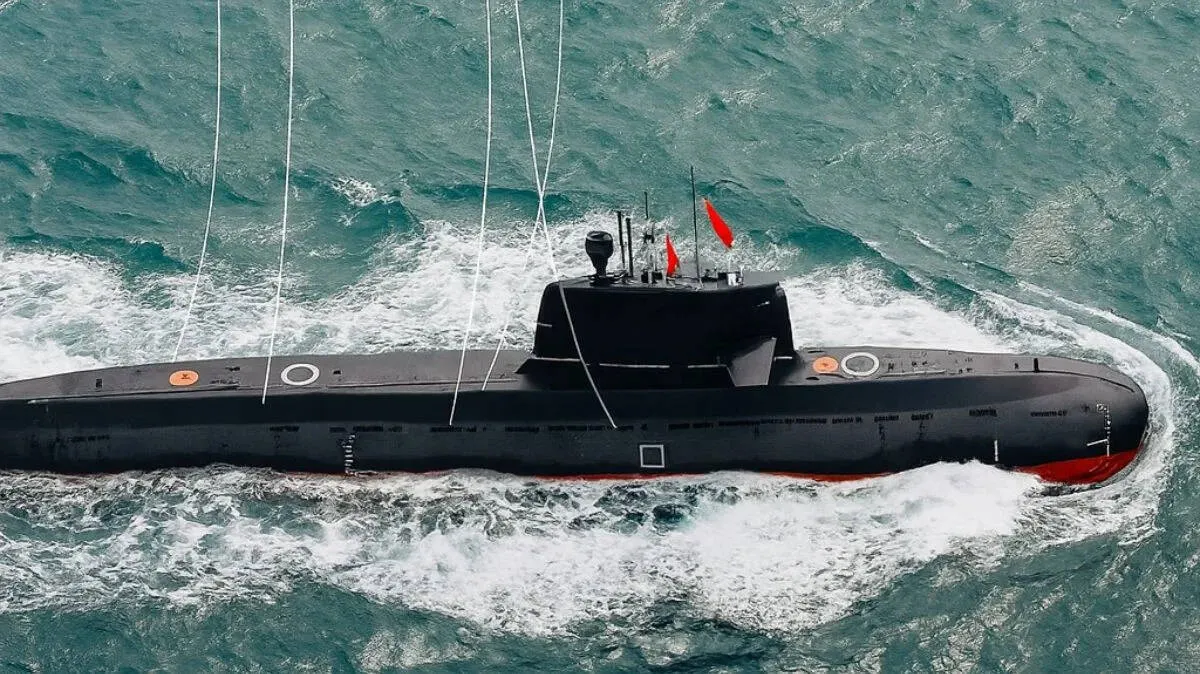
NEW DELHI: India is preparing to deploy an advanced underwater sensor network in the Indian Ocean to strengthen maritime surveillance amid the increasing presence of Chinese and Pakistani submarines in the region. The Defence Research and Development Organisation (DRDO) has initiated steps to build a fibre-optic surveillance grid capable of monitoring underwater activity round the clock.
The system, named the Underwater Fibre Optic Sensing System (UFOSS), will be led by the Naval Physical and Oceanographic Laboratory (NPOL), the Kochi-based DRDO laboratory. NPOL has already invited expressions of interest from industry partners for the design, deployment and commissioning of the project.
The surveillance network will consist of sensor nodes installed on the seabed and connected to shore-based monitoring stations through fibre-optic cables. The data collected by these sensors will be analysed to detect and track potentially hostile submarines operating in the region.
The move comes amid increasing activity by Chinese nuclear submarines and research vessels in the Indian Ocean. According to defence officials, Chinese research vessels are believed to collect data that could support future submarine operations in the region. India is also closely monitoring Pakistan's induction of Chinese-built Hangor-class submarines equipped with Air Independent Propulsion (AIP) technology. The AIP system enables submarines to remain submerged for weeks, posing a significant challenge to India's maritime security.
As India's submarine modernisation programme and nuclear submarine projects continue to face delays, the underwater sensor network is expected to enhance the Indian Navy's surveillance capabilities. Once operational, the system will enable continuous 24-hour monitoring of underwater movements across key areas of the Indian Ocean.















 HOME
HOME LATEST
 NOTIFIED NEWS
 POLL
POLL KERALA
  EDITORIAL
  INDIA
INDIA  WORLD
WORLD  CINEMA
  SPORTS
  LIFESTYLE
  SPECIAL
  SCIENCE & TECHNOLOGY
 |
|