

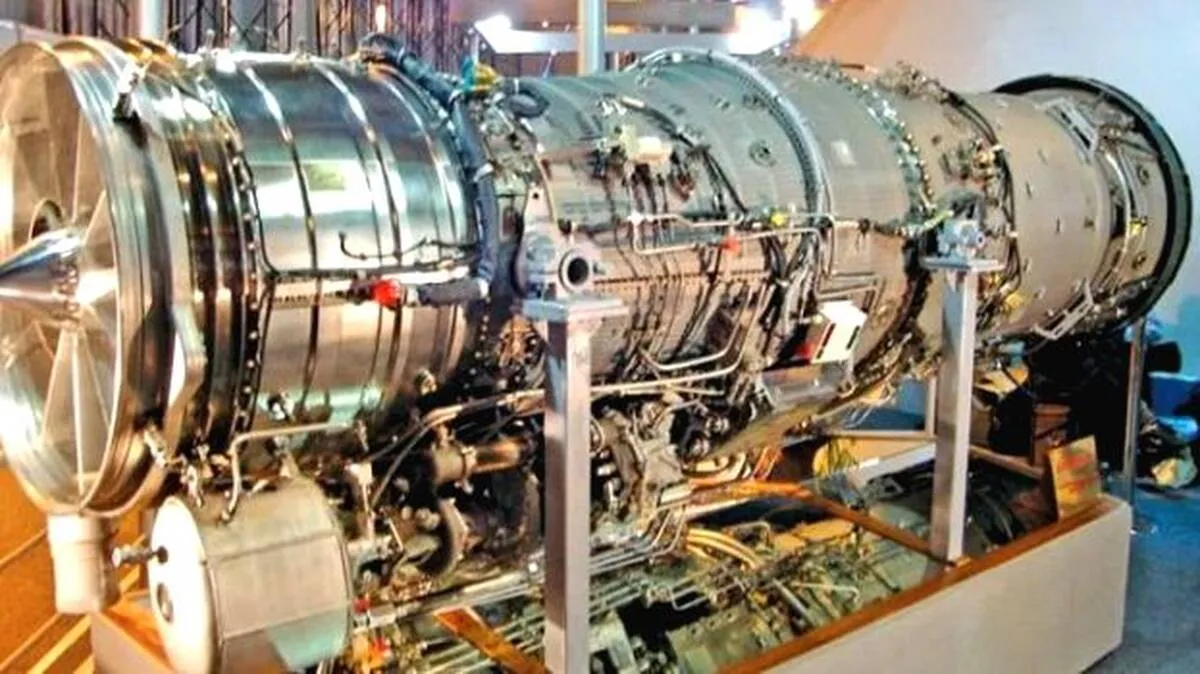
NEW DELHI: India’s indigenous Kaveri aircraft engine has successfully completed trials in extreme cold conditions in Russia, marking a key step towards developing a homegrown engine for combat aircraft and drones operating in harsh environments such as Kashmir and Arunachal Pradesh.
The trials were conducted in Russia to assess the engine’s performance in extremely cold weather. The target was to achieve 46 kilonewtons (kN) of thrust, equivalent to conditions at an altitude of 13,000 metres. The Kaveri engine achieved 48.5 kN of thrust, exceeding the target.
The engine is intended for use in the Ghatak, an unmanned combat aircraft. Further engine trials and tests after integration with the aircraft will have to be completed before the Kaveri can be used in the Ghatak.
Efforts are also underway to develop the more powerful Kaveri 2.0. The new version is expected to deliver 55–60 kN of dry thrust and 90–100 kN with an afterburner.
The Kaveri engine could not be used in India’s indigenous Tejas fighter because it could not achieve the required thrust. A foreign engine is currently planned for the Tejas Mk2. If Kaveri 2.0 achieves the required thrust and completes testing and certification, it could become part of India’s indigenous fighter aircraft programmes.
The Ghatak drone needs an engine that produces less heat and noise to help it remain undetected by enemy radars and infrared thermal cameras. For this reason, it requires a “dry engine” without an afterburner, a system that provides additional thrust by burning extra fuel. The successful achievement of 48.5 kN of thrust by the dry version of the Kaveri means the engine could meet the requirements of the Ghatak drone.
Project Ghatak is India’s indigenous unmanned combat aerial vehicle (UCAV), also described as a “killer drone”. It is being developed as a defence system capable of entering hostile areas without a pilot and carrying out attacks on enemy targets, including bombing and strikes against radar installations.
The Ghatak is being developed to carry out attacks deep inside hostile territory without putting pilots’ lives at risk. The attack drone is also expected to operate alongside future fighter aircraft such as the Tejas Mk2 and the Advanced Medium Combat Aircraft (AMCA).













 HOME
HOME LATEST
 NOTIFIED NEWS
 POLL
POLL KERALA
  EDITORIAL
  INDIA
INDIA  WORLD
WORLD  BUSINESS
  CINEMA
  SPORTS
  LIFESTYLE
  SPECIAL
  SCIENCE & TECHNOLOGY
 |
|