


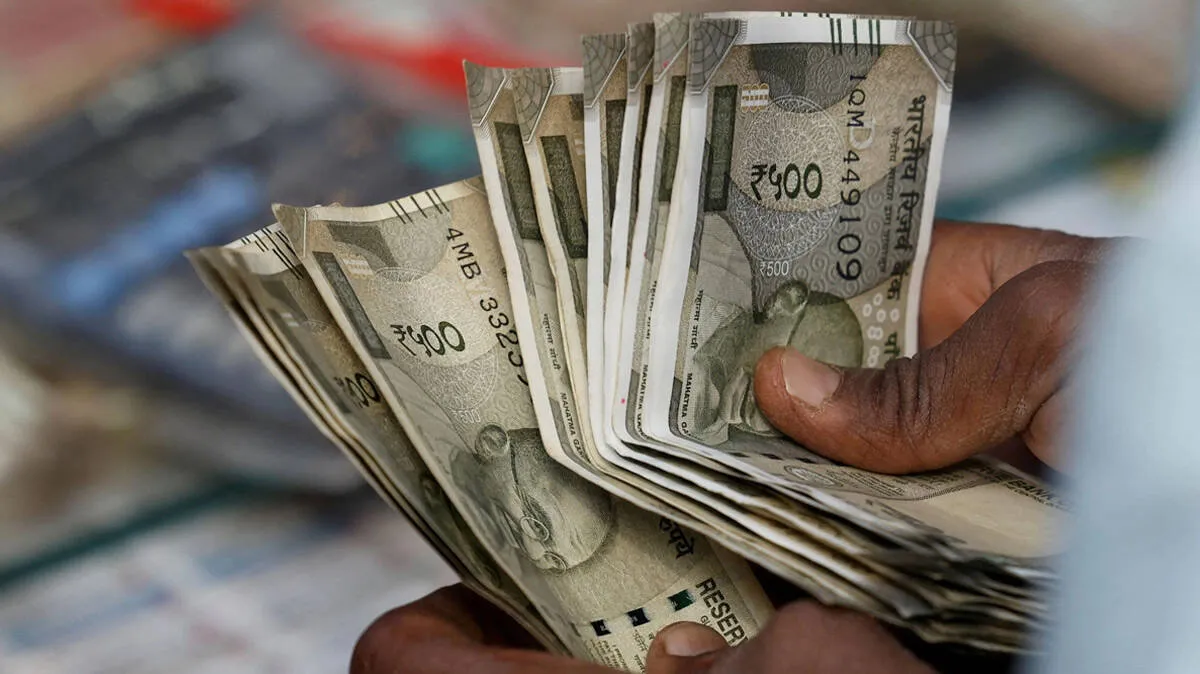
When a company with little visible business sends crores of rupees abroad for consultancy, software or freight, the first question should not be whether tax was deducted correctly. It should be whether there was a real business transaction at all.
That is what makes the Income Tax Department’s inquiry into suspicious outward remittances important. The official statement says that approximately 394 entities are under verification, including 117 in land-border States, together with 36 professionals who issued remittance certificates. Preliminary checks reportedly found non-filers, negligible turnovers, doubtful registered addresses and payment descriptions inconsistent with the entities’ business profiles. A relatively small group of professionals had issued a large number of Form 15CB certificates, while the foreign recipients were similarly concentrated.
Media reports have separately placed the trail at Rs 1.29 lakh crore, involving 6,422 newly identified entities, with 72.3 per cent going to five jurisdictions. These figures are not contained in the publicly reported CBDT statement. The Government should clarify the period covered and the relationship between the 6,422 entities reportedly identified and the 394 now being verified.
The destination does not prove wrongdoing. Singapore, the UAE and Hong Kong are established commercial centres. The concern lies in the pattern at the Indian end: little economic activity, doubtful addresses, unexplained funds, unrelated payment purposes, common directors or addresses, repeated certifiers and a narrow group of recipients.
India’s caution about foreign exchange has a history. Reserves stood at about $5.8 billion at the end of March 1991; by 7 August 2026, they had crossed $707 billion. India is not facing a comparable crisis. FERA’s regime of strict conservation has also given way to FEMA’s facilitation of legitimate trade and investment. Economic sovereignty is not about preventing money from leaving. It is about knowing why it left and what India received in return.
The problem is not new. By FY21, Registrars of Companies had struck 3.82 lakh inactive companies off the register, although inactivity did not make them shell companies. By November 2022, assessments under the Black Money Act had raised demands exceeding Rs 15,570 crore. The Panama and Paradise Papers investigations had also detected more than Rs 20,000 crore in undisclosed credits linked to Indian entities.
The immediate economic consequences should nevertheless be stated without exaggeration. At prevailing exchange rates, Rs 1.29 lakh crore is roughly $13–15 billion, less than 2 per cent of India’s present reserves. That amount alone cannot explain movements in the rupee, which also reflect oil prices, trade deficits, capital flows and global market conditions.
If the payments were fictitious, the loss is real. Foreign exchange would have left without corresponding goods, services or technology. Artificial expenses may have reduced taxable profits, while imported-service payments could involve failures in withholding tax, transfer pricing and GST. False invoices also distort official data and place honest businesses at a disadvantage.
The entire ₹1.29 lakh crore cannot automatically be called tax loss or capital flight. The trail may contain genuine payments, tax evasion, laundering, unauthorised capital transfers or a mixture of them. The investigation must separate one from the other.
The global experience is instructive. Danske Bank’s Estonian branch processed about $160 billion through American banks for its non-resident portfolio, with shell companies used to conceal ownership. Deutsche Bank’s Russian “mirror trades” moved more than $6 billion out of Russia between 2012 and 2014. Neither operation lacked paperwork. The failure was that nobody tested the complete transaction against its economic reality.
The national-security implications require care. Nothing disclosed so far establishes that these remittances financed terrorism, smuggling or hostile organizations. Yet FATF studies show that false invoices, front companies and hidden ownership are used by criminals, terrorist financiers and sanctions-evading networks. The risk warrants examination, but suspicion must arise from conduct and financial evidence, not merely from an address in a border State.
For the accountancy profession, the inquiry raises an uncomfortable question. Form 15CB, whose equivalent under the new income-tax framework is Form 146, is a certificate concerning the nature and taxability of specified payments to non-residents. It is not a forensic audit or an anti-money-laundering clearance, but it cannot be signed mechanically. The agreement, invoice, books, recipient and basis of the tax treatment must be examined with professional skepticism.
Responsibility does not end with the accountant. The remitter is responsible for its declaration and the commercial purpose of the payment. The authorized dealer bank has independent duties under FEMA and the Prevention of Money Laundering Act. It must know the beneficial owner, examine the source of funds and report suspicious transactions. A tax certificate cannot substitute for these obligations.
India already collects most of the necessary information. MCA has corporate records, the tax department has returns and remittance declarations, GSTN has turnover data, Customs has trade documents and banks see the money. The weakness is that each institution sees only a fragment of the transaction.
A high-value remittance should be tested automatically against the entity’s age, tax and GST turnover, bank activity, directors, beneficial owners, earlier foreign payments and the recipient abroad. Large credits immediately before an outward transfer, common addresses, unusual certification volumes and unrelated remitters paying one foreign beneficiary should trigger closer examination. Consultancy, software and royalty payments deserve particular attention because Customs may have no physical import to verify.
Controls must remain targeted and time-bound. A red flag may justify closer examination or a short hold; it should not leave a genuine business paralyzed for months. Once the inquiry is completed, the Government should publish an anonymized account of the methods uncovered. Explaining how the system was defeated will be more useful than merely naming a few offenders.
The Rs 1.29 lakh crore trail is a warning, not yet a verdict. The investigation must establish which transactions were genuine, which were fabricated and who knew what at each stage. Professionals should not become convenient scapegoats for failures involving promoters, banks and regulatory systems. Nor should professional status become a shield where the evidence shows conscious facilitation.
The real test will come after the searches and notices. Can another paper company still open an account, receive unexplained funds, produce a vague foreign invoice and complete the remittance before our databases compare notes? The answer will show whether India has merely investigated another scandal or closed the route that made it possible.
(Views are Personal)













 HOME
HOME LATEST
 NOTIFIED NEWS
 POLL
POLL KERALA
  EDITORIAL
  INDIA
INDIA  WORLD
WORLD  BUSINESS
  CINEMA
  SPORTS
  LIFESTYLE
  SPECIAL
  SCIENCE & TECHNOLOGY
 |
|