


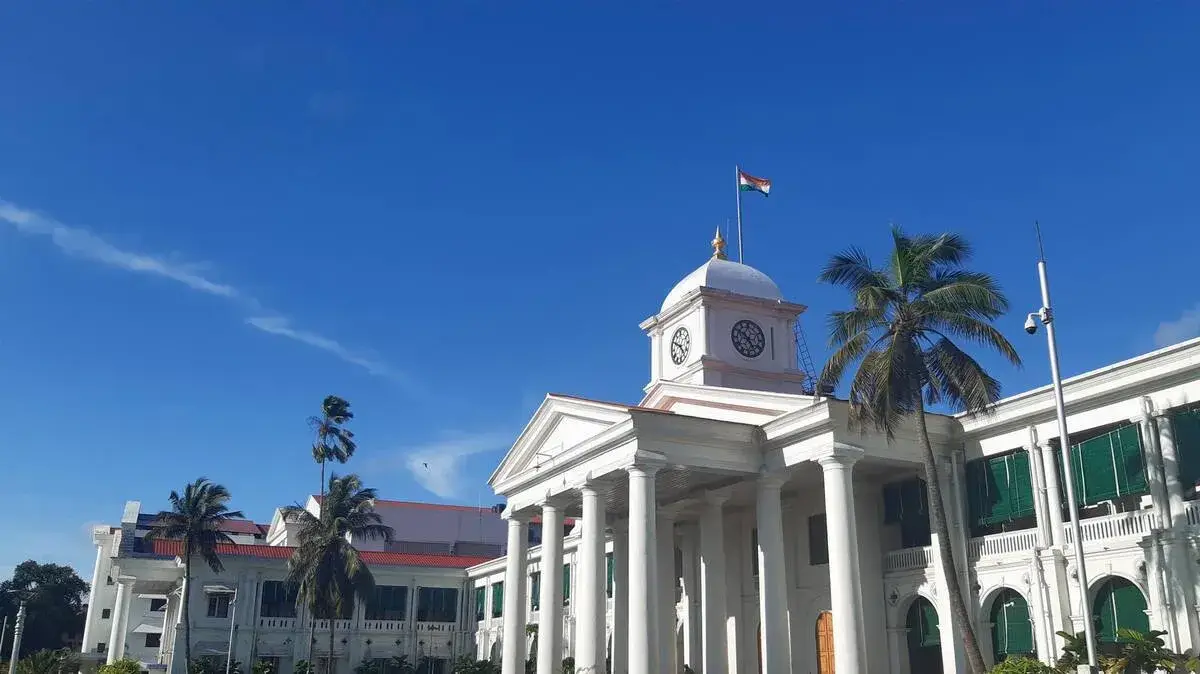
THIRUVANANTHAPURAM: The Administrative Reforms Commission, set up to ensure better public service delivery and modernise governance, is turning into a white elephant as the government has failed to act on its recommendations despite spending crores of rupees on the commission. The government is not legally bound to implement its recommendations.
Nearly Rs 10 crore was spent on the commission headed by former Chief Minister V.S. Achuthanandan, including Rs 8.06 crore towards salaries. The government did not take action on any of the 13 reports submitted by the commission. The only measure taken was the introduction of the SPARK system for distributing salaries and benefits to government employees.
The recommendations included setting up an independent Audit Commission, a Vigilance Commission headed by a High Court judge, using video conferencing to reduce employees' travel expenses, introducing a uniform system for issuing certificates at government offices, and enacting legislation on the Tamil Nadu model to ensure transparency in tenders. These recommendations were not implemented.
The recommendation to recognise the forest rights of tribal communities was implemented only partially.
There is also an argument that the Administrative Reforms Commission has little relevance when the Administrative Reforms Department already exists, and a high-level committee is in place to coordinate between government departments.
1. Vigilance Commission: To prevent corruption, the commission recommended a Vigilance Commission comprising two Vigilance Commissioners, a retired Chief Secretary and a DGP or ADGP with expertise in criminal investigation. It also recommended that a High Court judge be appointed as the Vigilance Commissioner.
2. Performance audit: The commission recommended strengthening performance audits and taking action against employees responsible for lapses. However, the government moved to discontinue performance audits in local self-government institutions.
3. Audit Commission: It recommended appointing a Senior Deputy Accountant General as an Audit Commissioner with executive powers and publishing all audit records. The government decided that strengthening the existing audit system would be sufficient.
4. Special courts and alternative arrangements: The recommendation to establish a special court for the trial of domestic violence cases was not implemented. The recommendation to establish a permanent alternative arrangement to ensure that people continue to receive services when government employees are on leave was also not implemented.
The commission recommended that its chairperson be given Cabinet rank, salary and allowances, an official residence, unlimited medical benefits and security. Members were also entitled to salary, medical benefits and travelling allowance.
V.S. Achuthanandan did not draw a salary, but received Rs 27 lakh towards expenses.
The first Administrative Reforms Commission was constituted in 1957, with then Chief Minister E.M.S. Namboodiripad as its chairman.
The second commission was constituted in 1965, with M.K. Vellodi as chairman.
The third commission was constituted in 1997, with then Chief Minister E.K. Nayanar as chairman.
The fourth commission was constituted in 2016, with V.S. Achuthanandan as chairman. Former Chief Secretaries C.P. Nair and Neela Gangadharan were its members.











 HOME
HOME LATEST
 NOTIFIED NEWS
 POLL
POLL KERALA
  EDITORIAL
  INDIA
INDIA  WORLD
WORLD  BUSINESS
  CINEMA
  SPORTS
  LIFESTYLE
  SPECIAL
  SCIENCE & TECHNOLOGY
 |
|