


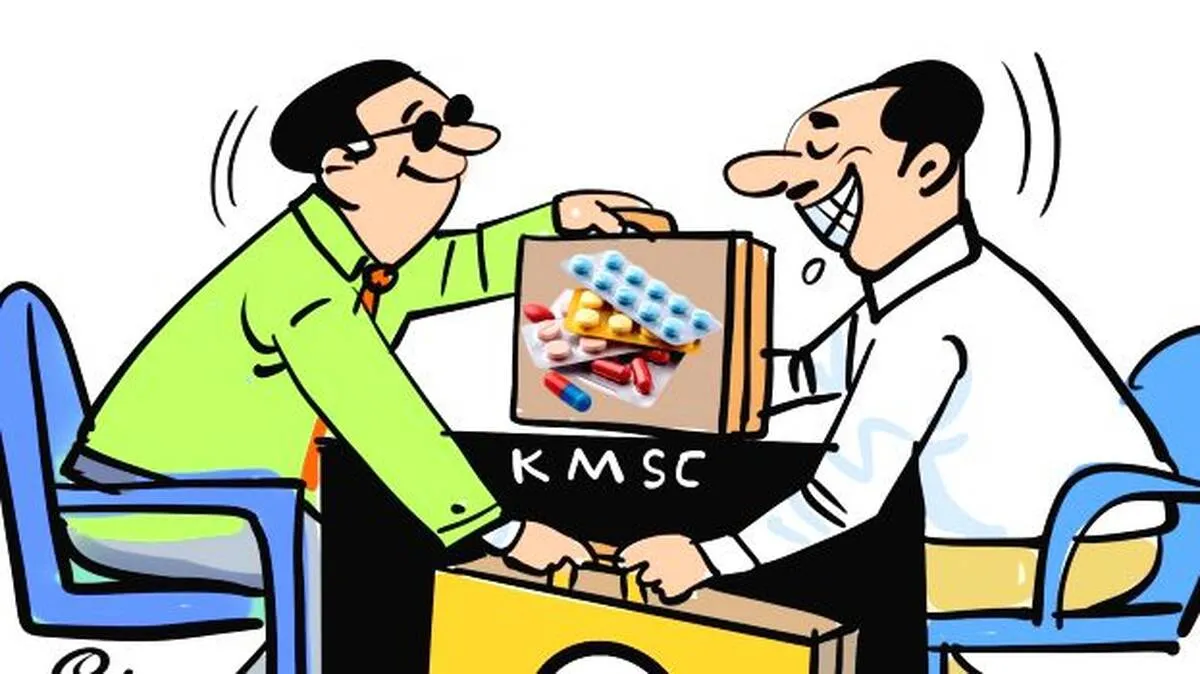
THIRUVANANTHAPURAM: Kerala accounts for less than three per cent of India’s population, but nearly 10 per cent of the medicines sold in the country are consumed in the state. Medicines worth around Rs 8,500 crore are sold in Kerala every year, making the state a major market for pharmaceutical companies. With companies competing to capture a larger share of the market, various offers are made to sellers. Some companies even offer 20 free strips to retailers for every 10 strips of tablets purchased.
With medicines being widely sold, quality testing is crucial. The State Drugs Control Department is responsible for checking the quality of medicines sold in the open market. It has its own laboratory and other facilities for this purpose. However, medicines purchased by the Kerala Medical Services Corporation Ltd (KMSCL) for government hospitals are not tested in the Drugs Control Department's laboratory.
Instead, the medicines are tested at other laboratories. This is where alleged collusion takes place. Samples sent to the laboratories are supposed to have the manufacturer's name and other identifying details removed. However, some employees in KMSCL's quality control department allegedly provide indications of the companies in the samples sent for testing. As a result, the testing is allegedly reduced to a mere formality as part of the alleged collusion.
The alleged beneficiaries include middlemen and some people associated with KMSCL, who reportedly receive commissions from pharmaceutical companies. If a 10 per cent commission is calculated on medicine transactions worth Rs 700 crore a year, the amount reaching such individuals would be around Rs 70 crore.
Following the exposure of alleged irregularities, the government is considering an inquiry into the sources of income of employees who have worked in KMSCL's quality control department over the past 10 years.
The Kerala State Drugs and Pharmaceuticals (KSDP), under the Industries Department and based in Alappuzha, is a government-run company that manufactures medicines at affordable prices. The company, which once functioned efficiently, is now facing allegations of poor functioning. In 2024, medicines supplied by KSDP and purchased and distributed by KMSCL were also found to be of substandard quality.
At the time, 21.56 lakh glimepiride tablets used to treat diabetes were seized after being found to be of substandard quality. In 2022, amoxicillin antibiotics and one lakh aspirin gastro-resistant tablets were also seized after being found to be of substandard quality.















 HOME
HOME LATEST
 NOTIFIED NEWS
 POLL
POLL KERALA
  EDITORIAL
  INDIA
INDIA  WORLD
WORLD  BUSINESS
  CINEMA
  SPORTS
  LIFESTYLE
  SPECIAL
  SCIENCE & TECHNOLOGY
 |
|