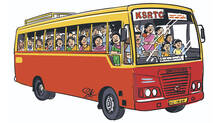


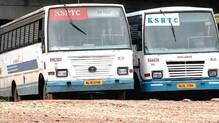
THIRUVANANTHAPURAM: In a major policy shift, the newly formed UDF government in Kerala has initiated urgent steps to secure 950 electric buses under the Central Government’s 'PM e-Bus' scheme—a project that was notably shelved by the preceding administration. Transport Minister C.P. John has directed the Kerala State Road Transport Corporation (KSRTC) to fast-track and submit the relevant files immediately.
The revival of the project comes at a crucial time for the state government, which is looking for cost-effective measures to sustain its recently announced free-travel scheme for women. Under the central framework, private operators supply the e-buses complete with drivers on a wet-lease model. Out of the total rental cost of ₹54 per kilometer, the Central Government will provide a subsidy of ₹22, leaving the state to cover the remaining ₹32 alongside appointing its own conductors.
Missed opportunity resurrected
The Union Government had initially approved the allocation of 950 e-buses for ten major cities in Kerala back in 2024. However, the plan hit a roadblock when the then-Transport Minister, K.B. Ganesh Kumar, rejected the offer, claiming the state had an adequate fleet. The previous department subsequently pivoted to purchasing 145 diesel buses under the premise of profitability and floated tenders for an additional 180 diesel vehicles.
Industry experts note that bypassing electric mobility exposed KSRTC to volatile fuel price hikes. Even though the Chief Minister’s Office (CMO) had intervened at one point, asking the Transport Department to reconsider the central scheme, the directive went unheeded while neighbouring states like Tamil Nadu and Karnataka successfully capitalised on the allocation.
High efficiency, lower costs
A comparative cost analysis highlights the financial viability of the transition. Running a conventional diesel bus costs KSRTC ₹51 per kilometre, whereas an electric bus slashes operational expenditures down to just ₹27 per kilometre.
Furthermore, the operational model heavily cushions the state from financial risk:
Urban Distribution Plan
The 950-bus fleet is slated to be distributed among ten key urban centers to curb vehicular pollution and modernise public transit:
"We will not turn our backs on beneficial Central schemes. We are reviewing the files thoroughly and will make every effort to secure these buses for the state." — C.P. John, Transport Minister











 HOME
HOME LATEST
 NOTIFIED NEWS
 POLL
POLL KERALA
  EDITORIAL
  INDIA
INDIA  WORLD
WORLD  CINEMA
  SPORTS
  LIFESTYLE
  SPECIAL
  SCIENCE & TECHNOLOGY
 |
|