

The debate over the Special Intensive Revision of electoral rolls must separate legal validity from implementation gaps. Recent events across the country have made the debate over the Special Intensive Revision (SIR) of electoral rolls louder than it is clear. To ground the conversation, three questions must be clearly set out to understand the entire issue: what SIR is, why it is necessary, and what role the Chief Election Commissioner serves. At the outset, it should be clarified that SIR is not a novel plan or strategy of the present Election Commission, but is a recognised mechanism in India. In fact, in May 2026, the Supreme Court categorically upheld the Election Commission’s power to conduct it under Article 324 of the Constitution and Section 21(3) of the Representation of the People Act, 1950. The Court also held that SIR cannot be called illegal merely because it differs from the routine annual revision. Contrarily, it said that the object of SIR aligns with the principle of free and fair elections. On the question of legal validity, the matter stands largely settled.
Clean rolls are a basic requirement of a free election. The last intensive revision in most states took place in the early 2000s, and in the two decades since, India has seen heavy migration, rapid urbanisation, deaths that were never recorded over the decades and resultantly voters have registered in more than one place. Ordinary annual revisions cannot fully correct errors accumulated over this lack and multiple-entries. A periodic resurvey is simply a practical necessity.
Critics argue that the documentation burden falls hardest on migrants, the poor and women, so eligible voters could be dropped. They object to the Election Commission effectively weighing questions of citizenship, and they say the timing before elections and a lack of transparency have eroded trust. They also accuse the Commission of being opaque and slow to answer opposition complaints. Correctness these allegations should be addressed legally through following the due procedure and the right course. Further, the allegations against arbitrariness and colourisation of power should be judged on evidence and not on propaganda.Whether the execution has been fair and accurate is therefore an empirical question. The answer lies in final deletion figures, in how many wrongly excluded voters were restored, and in how many fictitious entries were actually removed. The SIR exercise in some states indicates how large the gap between old and updated list can be and notably has been accepted as otherwise it would have detrimental effects to future elections. Asking whether SIR affected the latest elections is largely academic. Conducting a full revision before every single election is not feasible, and not conducting one at all carries costs of its own, in the form of bloated and unreliable rolls.
It would be utopian to say that each and every step would have been taken without any faults and thus no gaps may exist in implementation. But the gaps in execution do not invalidate the whole process. Where a procedural lapse is alleged, the remedy is to approach the appropriate authorities if necessary which Courts have done previously. Demanding the resignation of the Chief Election Commissioner does not fix a wrongly deleted name. Documented grievances, transparent data and judicial review do and that is in a way upholding the constitution and constitutionalism.
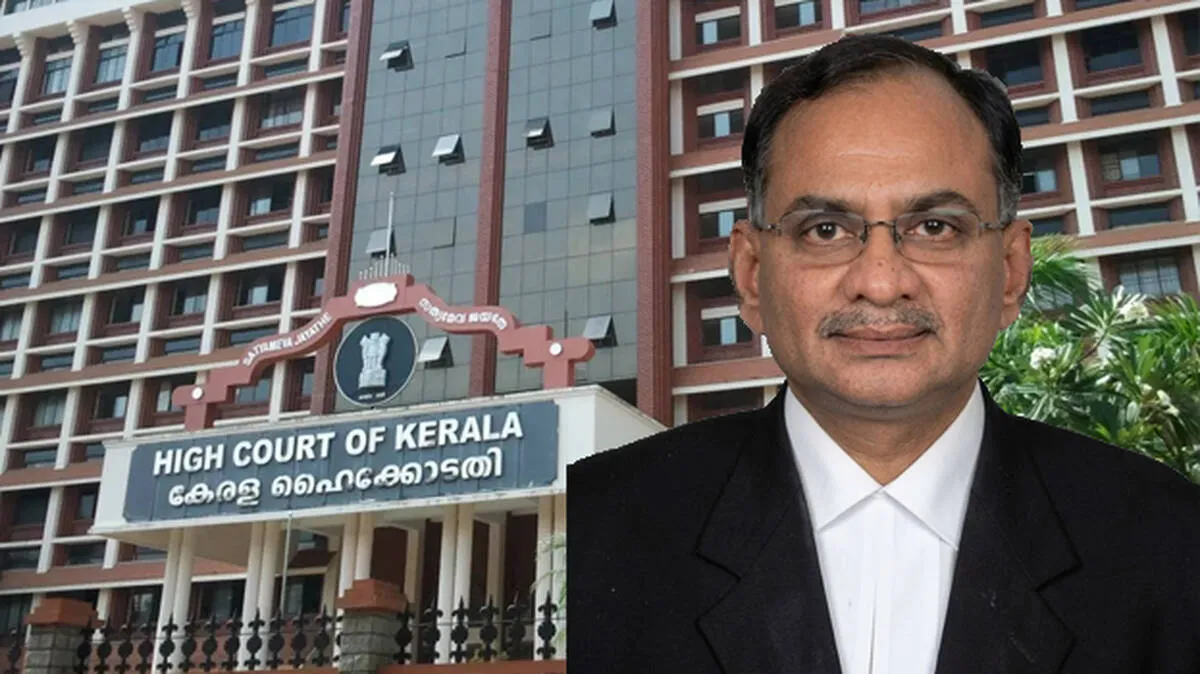
-Justice V. Chitambaresh, Former Judge, Kerala High Court
Opinion. The views expressed are the author’s own.













 HOME
HOME LATEST
 NOTIFIED NEWS
 POLL
POLL KERALA
  EDITORIAL
  INDIA
INDIA  WORLD
WORLD  BUSINESS
  CINEMA
  SPORTS
  LIFESTYLE
  SPECIAL
  SCIENCE & TECHNOLOGY
 |
|